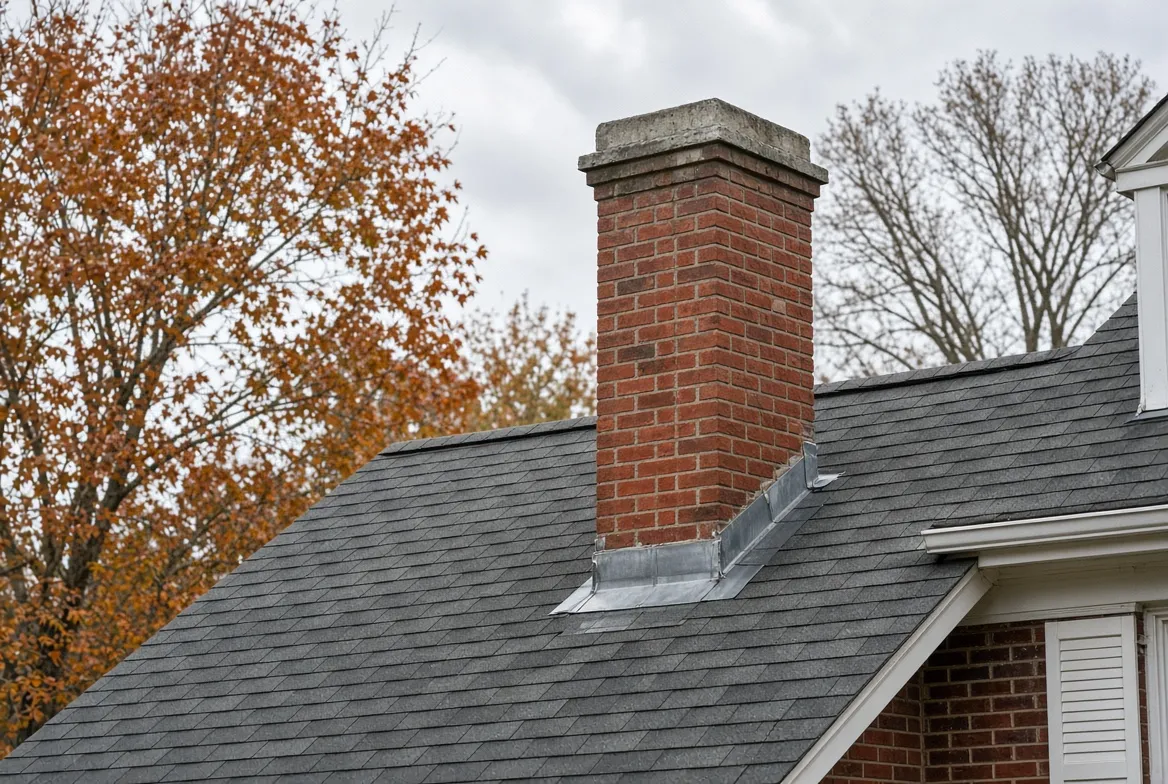
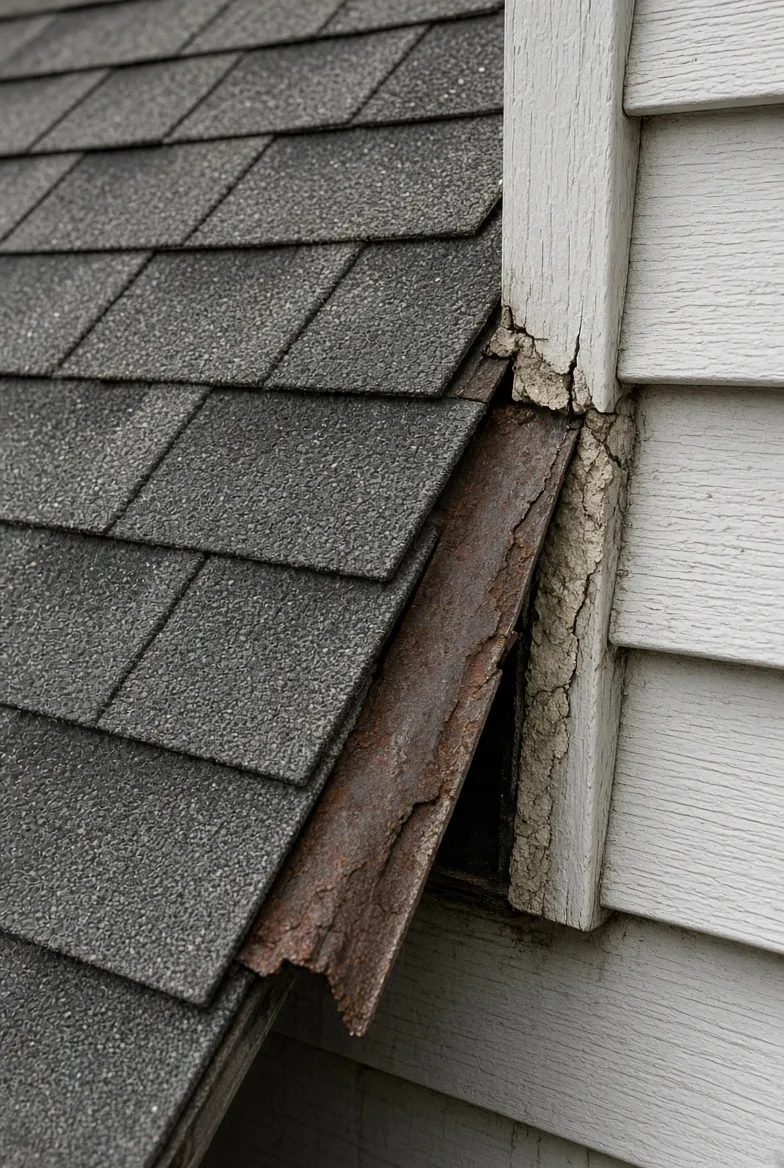
Flashing. Base or step flashing sits under the shingles against the chimney sides, and counter flashing is cut into the mortar to cover it. When the counter flashing pulls out of the joint or its sealant fails, water runs behind it. The fix is resetting or replacing the counter flashing, and often the step flashing below it. Our roof flashing repair page explains these layers in detail.
Leak repair · Severna Park, MD
Chimney Leak Repair in Severna Park, MD
A leak beside the fireplace or in the ceiling next to the chimney doesn't always mean the flashing failed. Water can enter through five different parts of a chimney.
Calls only, no forms Severna Park-area provider Leak repair, nothing else Free to call, no obligation
What is chimney leak repair?
Chimney leak repair is the work that stops rain from getting into the house through or around a chimney. A chimney is the biggest hole in most roofs, and it’s made of materials (brick, mortar, stone, metal and sealant) that all move and age differently. That makes it one of the most common leak points on older homes, and on many of the brick-chimney houses built across Anne Arundel County in the second half of the last century.
The repair itself might be new counter flashing, a rebuilt crown, repointed mortar, a new cap, or a cricket on the uphill side. Getting the diagnosis right is the whole job, because a chimney can leak through any of these. If you’re comparing this with other leak sources, our guide to roof leak repair Severna Park, MD shows how the different entry points behave.
How does chimney leak repair work?
A good repair starts by working out which of the five water paths is open.
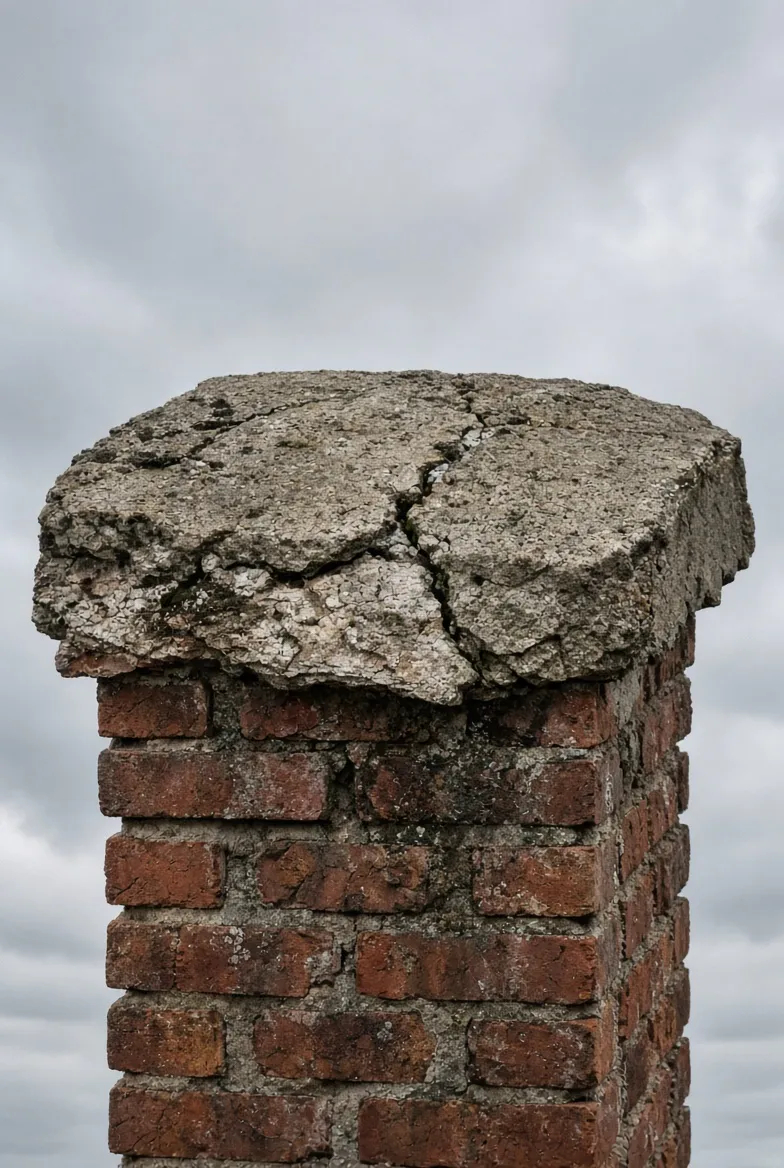
Crown. The crown is the concrete or mortar slab at the top of the chimney. Cracks let water straight into the masonry. Small cracks can be sealed with a crown coating; a crumbling crown needs rebuilding.
Masonry. Brick and especially old mortar absorb water. Missing or cracked joints are cut out and repointed with fresh mortar. Once the joints are sound, a breathable water repellent can reduce absorption.
Cap. An open flue lets rain fall straight down the chimney. A cap with a mesh screen stops rain and animals.
Cricket. On a wide chimney, water and leaves pile up behind it. A cricket diverts that water to each side.
What are the warning signs of a chimney leak?
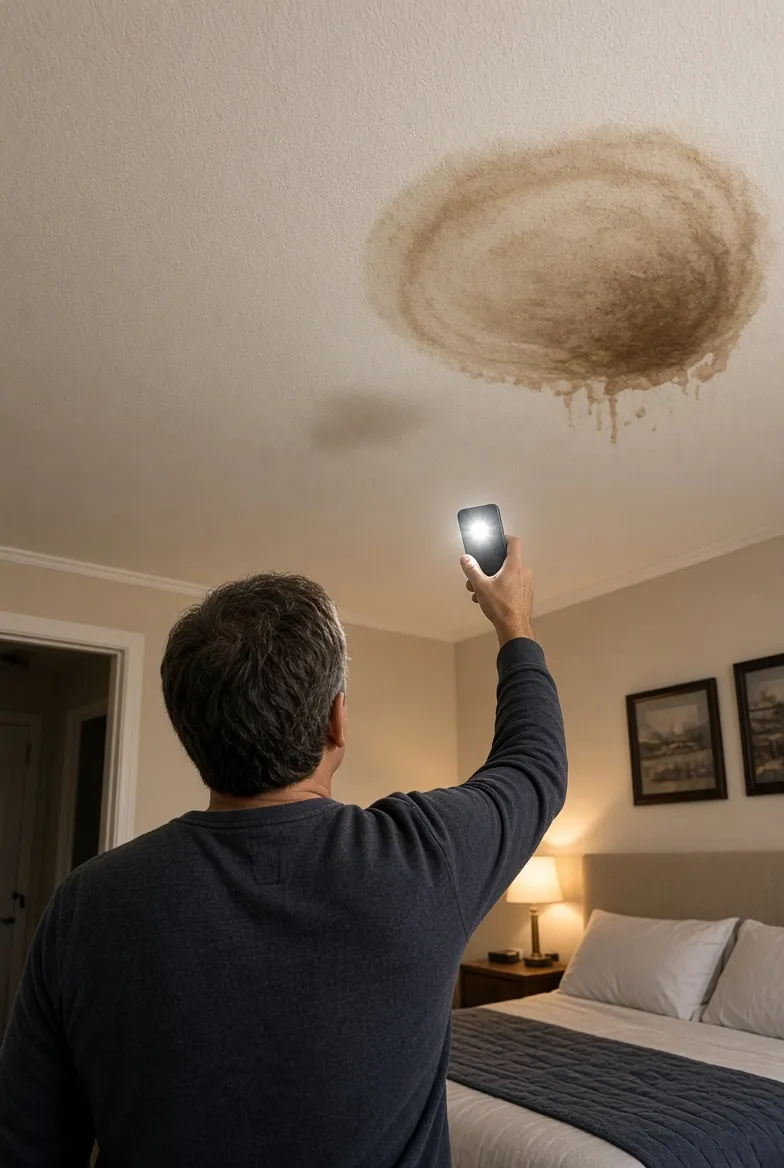
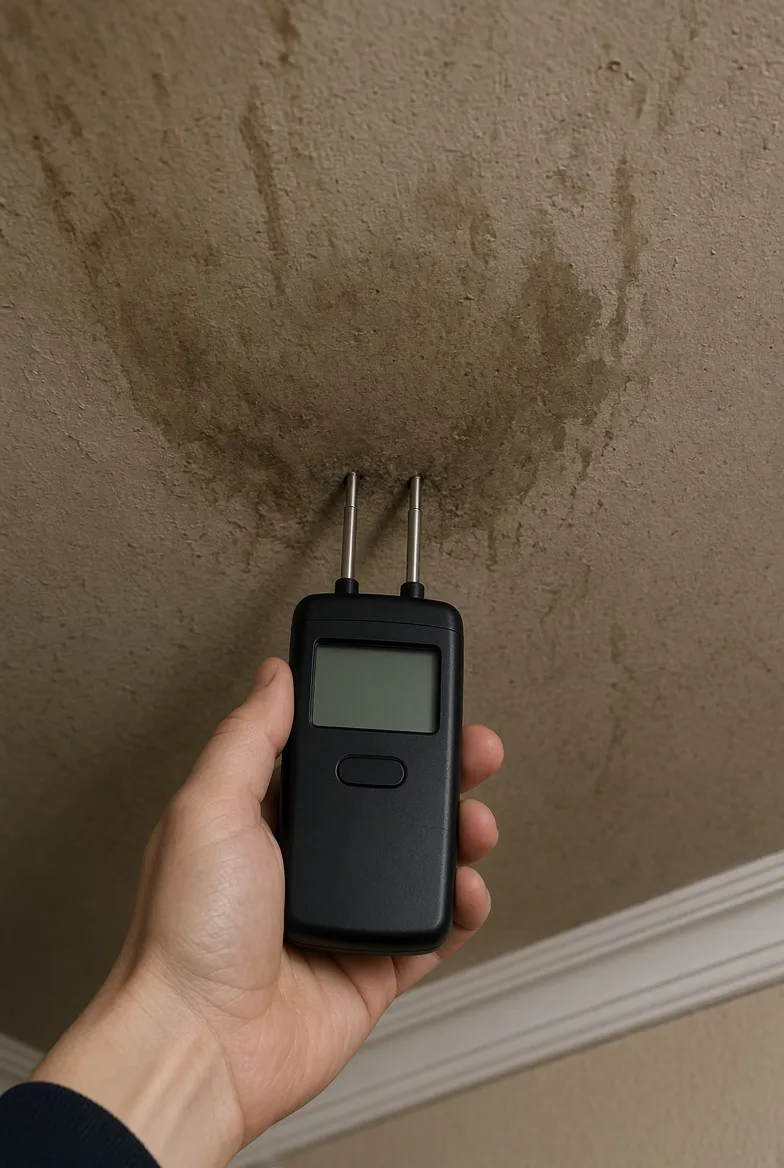
- Stains on the ceiling or wall right beside the chimney or fireplace.
- Water or rust in the firebox, or a rusted damper.
- White, chalky deposits on brick, inside or outside.
- Cracked or crumbling mortar joints visible from the ground.
- Counter flashing pulled out of the mortar line.
- A musty or damp smell from the fireplace after rain.
- Leaves and debris piled behind the chimney on the roof.
- Peeling paint or bubbling plaster on the chimney breast inside.
What causes chimneys to leak?
Masonry is porous by nature, so time alone causes much of it. Every freeze-thaw cycle drives water into small cracks, freezes, expands and widens them. Maryland winters bring plenty of nights that dip below freezing followed by milder days, which makes this cycle a steady source of damage to crowns and mortar.
Flashing is the other big cause. A chimney and the roof framing move independently, so the joint between them is under constant stress, and the sealant that seals counter flashing dries out in summer sun. Missing caps, crowns built with plain mortar instead of a proper crown mix, and wide chimneys without crickets round out the list. In wooded neighborhoods, leaves piling up behind the chimney hold water against the flashing for days after each storm.
What can you safely check yourself first?
From the ground with binoculars, look at the top of the chimney: is there a cap? Is the crown cracked? Are mortar joints missing? Look at where the metal meets the brick for gaps.
Inside, open the damper with a flashlight on a dry day and look for rust or water marks. In the attic, look at the framing around the chimney for dark stains, and compare the damp spots to the chimney sides. Water on the uphill side suggests the cricket area; water on all sides points to the crown or masonry.
What happens when the roofer visits?
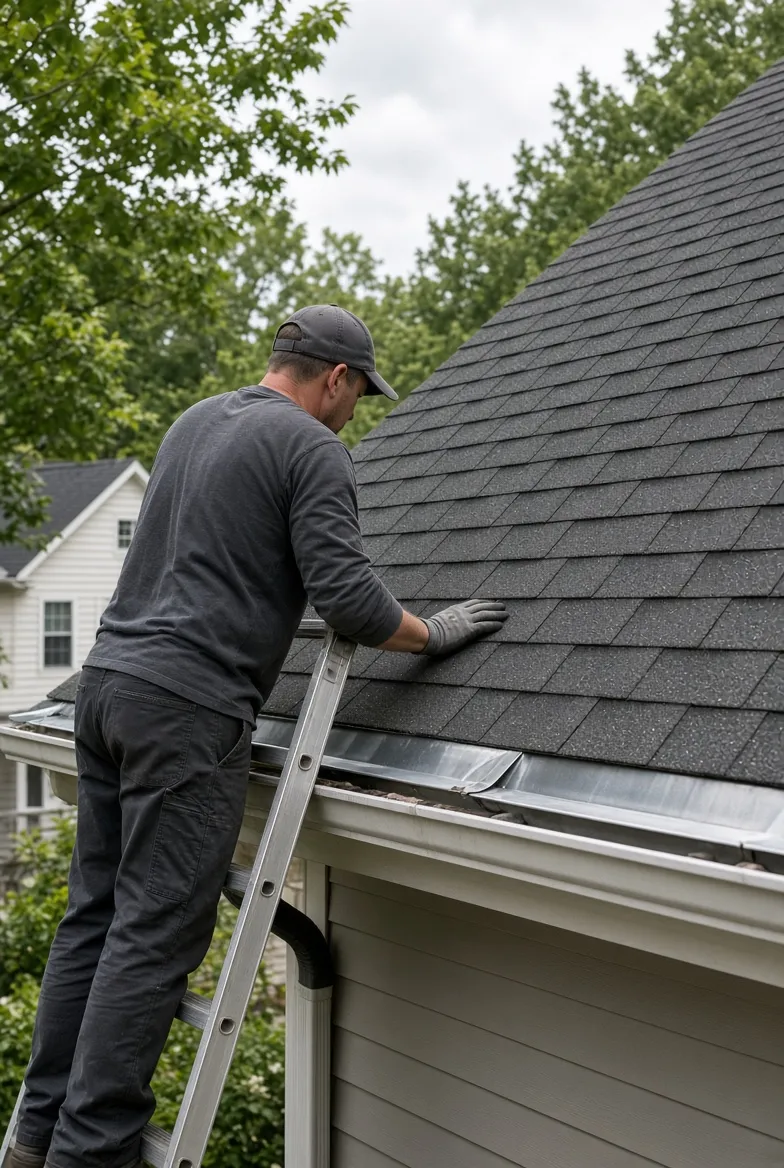
- Inside first. The roofer looks at the stain, the attic framing and the firebox to see where the water appears.
- Roof and chimney inspection. Flashing, crown, cap, mortar and the area behind the chimney are checked.
- Water test if needed. Running water on one part at a time, starting low and working up, isolates the source.
- Repair plan. You get a clear explanation of which parts are leaking and which work is roofing versus masonry.
- Repair and photos. Flashing is reset or replaced, masonry repairs are done, and photos show the finished details.
What affects the cost of chimney leak repair?
| Factor | Why it matters |
|---|---|
| Which part is leaking | A cap is simple; rebuilding a crown or flashing is more work. |
| Chimney size | Wide chimneys need more flashing and may need a cricket. |
| Masonry condition | Extensive repointing or brick replacement adds time. |
| Roof pitch and height | Steep roofs need extra safety setup around the chimney. |
| Damage inside | Rotted framing or wet drywall adds carpentry and finishing. |
How do you keep a chimney from leaking again?
A chimney repair lasts longest when the whole system is treated, not just the spot that failed. Once the leak is fixed, a few habits keep it that way.
Keep the top covered. A properly sized cap with mesh keeps rain, leaves and animals out of the flue. If the crown was sealed or rebuilt, ask how often the provider suggests checking the coating; crowns take the most direct weather of any part of the house.
Watch the mortar. Mortar is meant to be softer than brick and to wear first. When joints start to recess or crumble, repointing early is far cheaper than replacing spalled bricks later. Look at the chimney from the ground each spring, after the freeze-thaw season has done its work.
Clear the uphill side. On wooded lots, leaves and twigs collect behind the chimney every fall. If your chimney has no cricket and debris piles up there, ask whether adding one makes sense the next time the roof is worked on.
Don’t seal what should breathe. Paints and non-breathable sealers can trap moisture inside brick, which then freezes and flakes the face off. If a water repellent is used, it should be one made for masonry that lets vapor escape.
Pair it with roof work. When the roof is replaced, the chimney flashing should be replaced too, never bent back and reused. Mention this to anyone quoting new shingles.
When is a chimney leak an emergency?
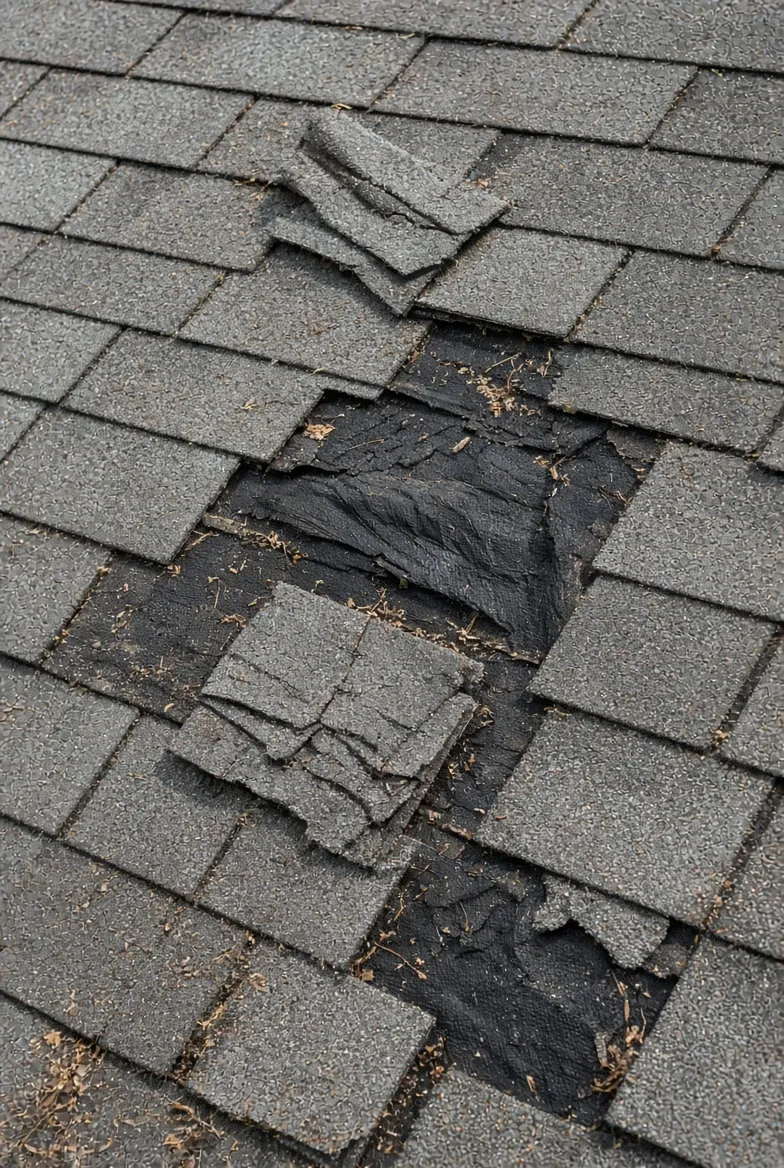
It’s urgent when water is running into the firebox or down the wall during a storm, when the chimney has visibly shifted or lost bricks, or when a storm tore the flashing loose. Those can let in a lot of water fast or signal a structural problem.
A slow, seasonal stain still deserves attention before winter. If you can’t tell where the water is coming from, a roof leak detection visit can separate chimney water from other sources nearby.
Does a chimney leak need a roofer or a chimney sweep?
It depends on where the water enters. Flashing and the cricket are roofing work. The crown, cap, flue and masonry are often chimney-specialist work. Many problems involve both, so the first visit should identify which part is leaking.
Why does my chimney leak even though the flashing looks fine?
Brick and mortar absorb water, and a cracked crown or missing cap lets rain straight into the chimney structure. Water can then soak down through the masonry and appear inside, even with good flashing.
What is a chimney cricket?
A small peaked structure built behind a chimney on the uphill side. It splits water and debris around the chimney instead of letting it pool against the back wall. Wide chimneys generally need one.
Can I just seal the brick to stop the leak?
A breathable masonry water repellent can help if the brick is soaking up water, but it won't fix bad flashing, a cracked crown or open mortar joints. Sealing the wrong problem can also trap moisture. Find the source first.
Is a chimney leak dangerous?
Water in the chimney can rust the damper and firebox parts, damage the flue liner and rot the framing around the chimney. Get it checked before your next fire, and keep it in mind as heating season starts.
Related repairs and areas
Water coming in?
Get chimney leak repair help in Severna Park today
Call and describe what you're seeing. You'll be connected with a local roofing provider who can look at it.
(773) 302-2292