Safety and assessment. The roofer looks at the weather and the roof pitch before climbing. Lightning, high wind or a wet, steep roof can make it unsafe to go up, and in that case the work starts inside: catching water, opening the attic and tracing the path.
Leak repair · Severna Park, MD
Emergency Roof Leak Repair in Severna Park, MD
Water is coming in right now. Here is how to limit the damage in the next hour, what an emergency roofer actually does on the roof, and when a leak truly can't wait.
Calls only, no forms Severna Park-area provider Leak repair, nothing else Free to call, no obligation

What is emergency roof leak repair?
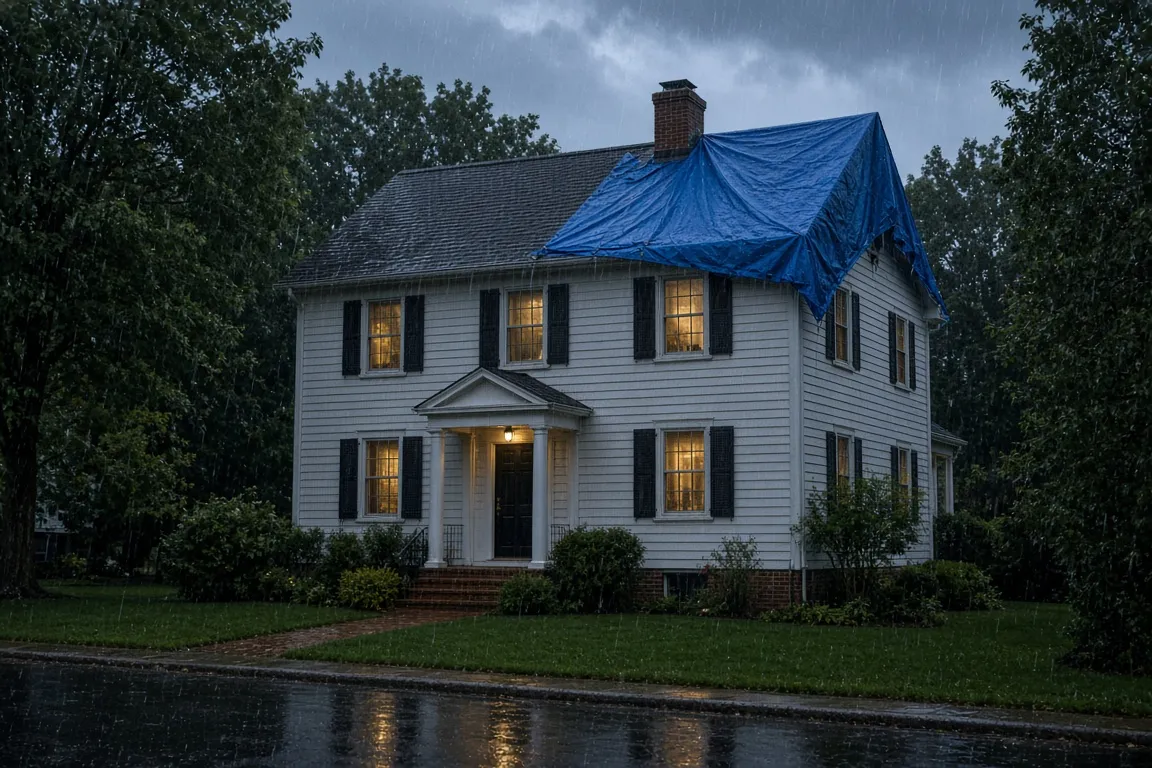
Emergency roof leak repair is the work done when water is actively entering a home and waiting for a normal appointment would cause more damage. The goal is different from a routine repair. The first job is to stop or redirect the water, protect the interior and make the roof safe until a permanent fix can be done in dry weather.
In practice that means a temporary barrier: a heavy tarp fastened over the damaged area, a peel-and-stick membrane patch, or roofing cement worked into an open seam. It also means finding where the water really enters, because the drip on your ceiling is often several feet downhill from the opening on the roof. If you’re not sure the situation is an emergency yet, our overview of roof leak repair in Severna Park explains the common sources and how to tell them apart.
How does an emergency roof repair work?
Most emergency visits follow the same order: make it safe, stop the water, then plan the real repair.
Temporary protection. On the roof, the most common method is tarping. A good tarp job runs from below the damage up and over the ridge, so water can’t run underneath it, and it is fastened through wood battens rather than nailed through the tarp alone. For a small, well-defined opening such as a lifted shingle or a split pipe boot, a membrane patch or sealant may be enough to get through the storm.
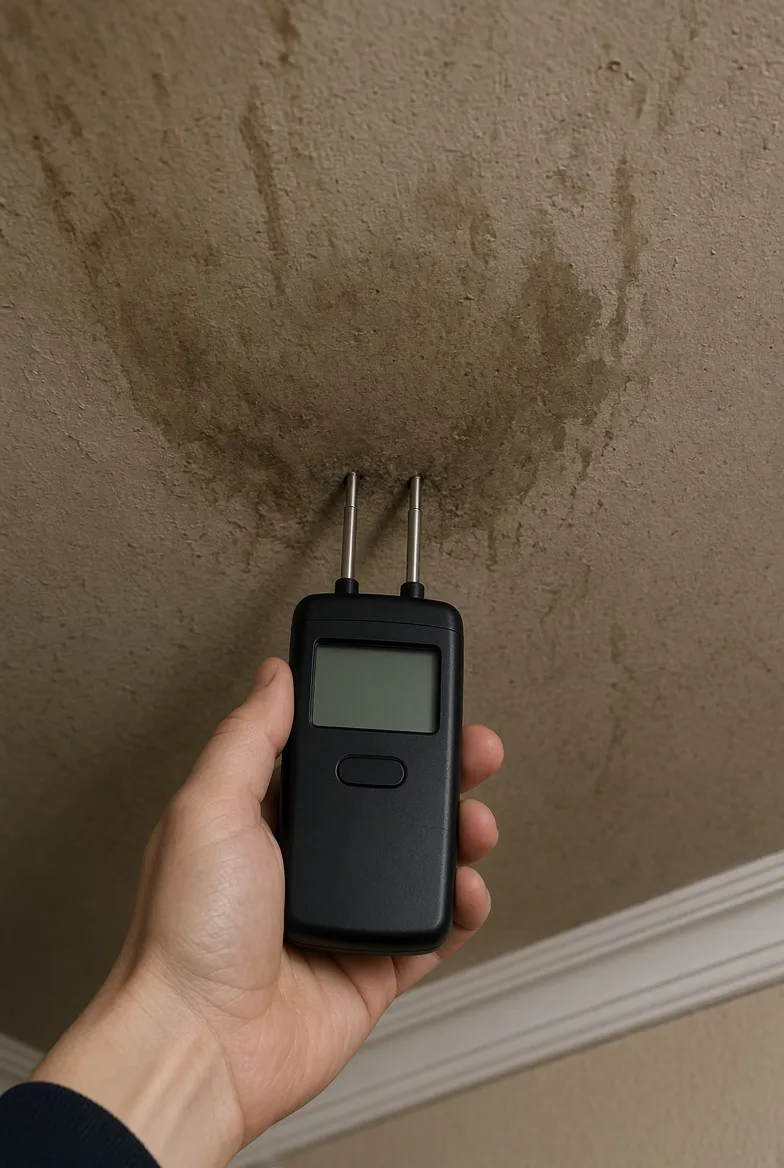
Water management inside. Wet insulation holds water against the ceiling drywall. Pulling soaked insulation back, setting buckets and running fans or a dehumidifier limits mold and ceiling damage.
Documentation. Before and after photos of the damaged area, the attic and the interior help with an insurance claim and with planning the permanent repair. After the weather clears, the provider returns to replace damaged shingles, flashing or decking properly. If the source still isn’t obvious at that point, a roof leak detection visit pins it down.
What are the warning signs that a roof leak is an emergency?
- Water dripping or streaming from the ceiling, a light fixture or a smoke detector.
- A ceiling that sags, bulges or feels soft when pressed gently from below.
- Water running down the inside of an exterior wall or around a window frame.
- Daylight visible through the roof boards from inside the attic.
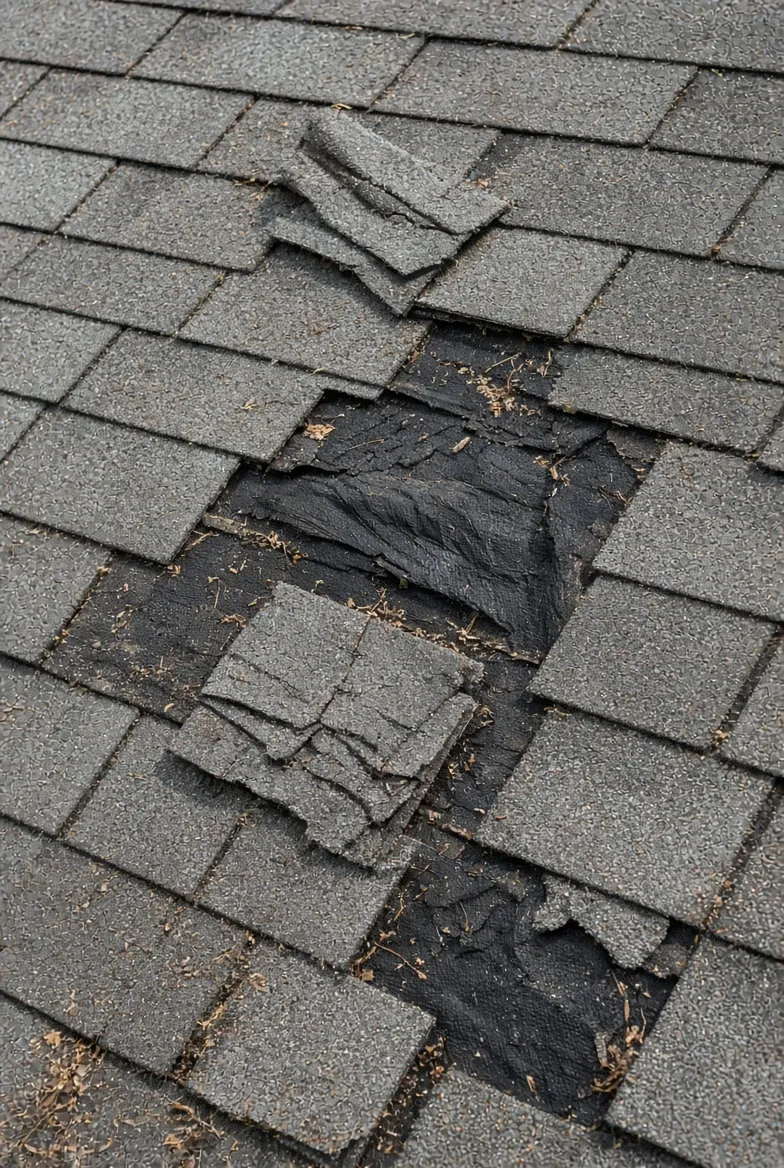
- Shingles, ridge caps or flashing lying in the yard after high wind.
- A tree limb resting on or through the roof surface.
- Puddles forming on the attic floor or soaked, matted insulation.
- A musty smell or new stain that grows noticeably during a single storm.
What causes sudden roof leaks?
Most emergencies are an old weakness meeting a strong storm. In and around Severna Park, nor’easters push rain sideways for hours, summer thunderstorms dump heavy rain in a short burst, and the remnants of tropical systems bring both. Water that would run off harmlessly in light rain gets driven under shingles and flashing.
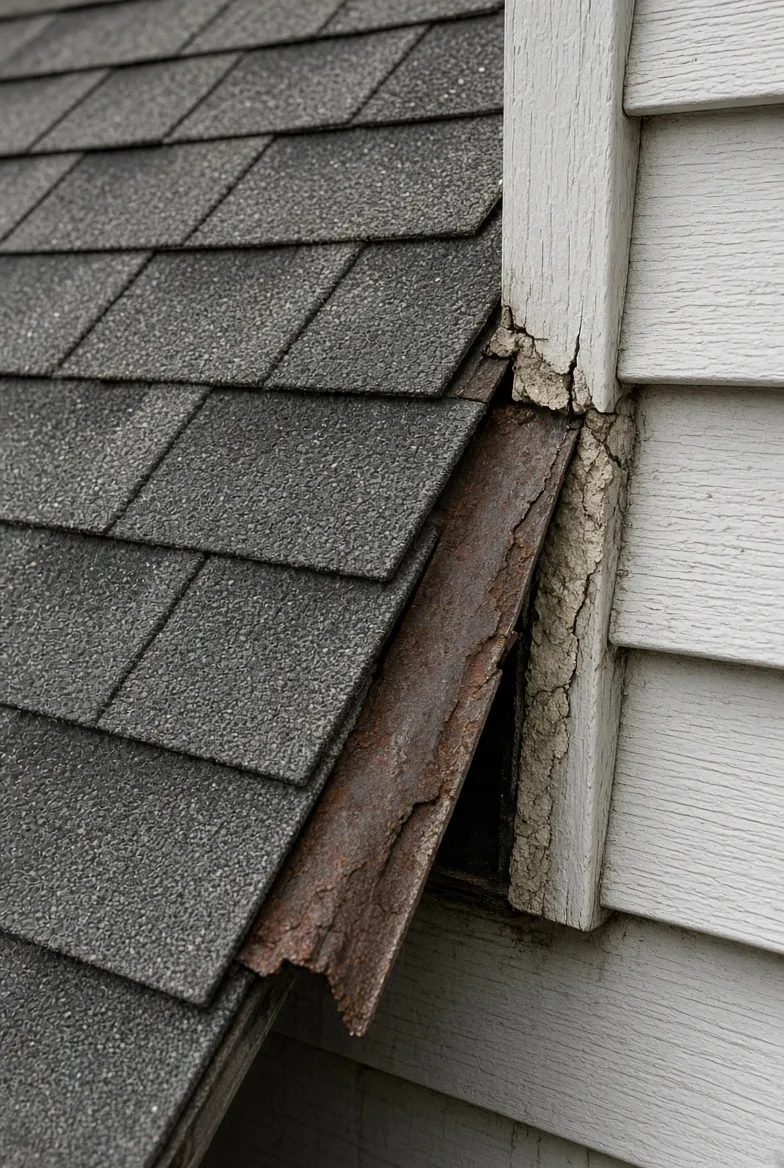
The usual culprits are wind-lifted or missing shingles, cracked rubber boots around plumbing vents, flashing that has pulled away from a chimney or wall, and branches that puncture the roof. Mature trees are a big part of the local landscape, and falling limbs cause many sudden openings. Clogged gutters and valleys full of leaves can also back water up under the roof edge during a downpour.
Less often, the cause is ice. During a cold snap, snow melting over a warm attic can refreeze at the eaves and form an ice dam that pushes meltwater back under the shingles.
What can you safely check yourself first?
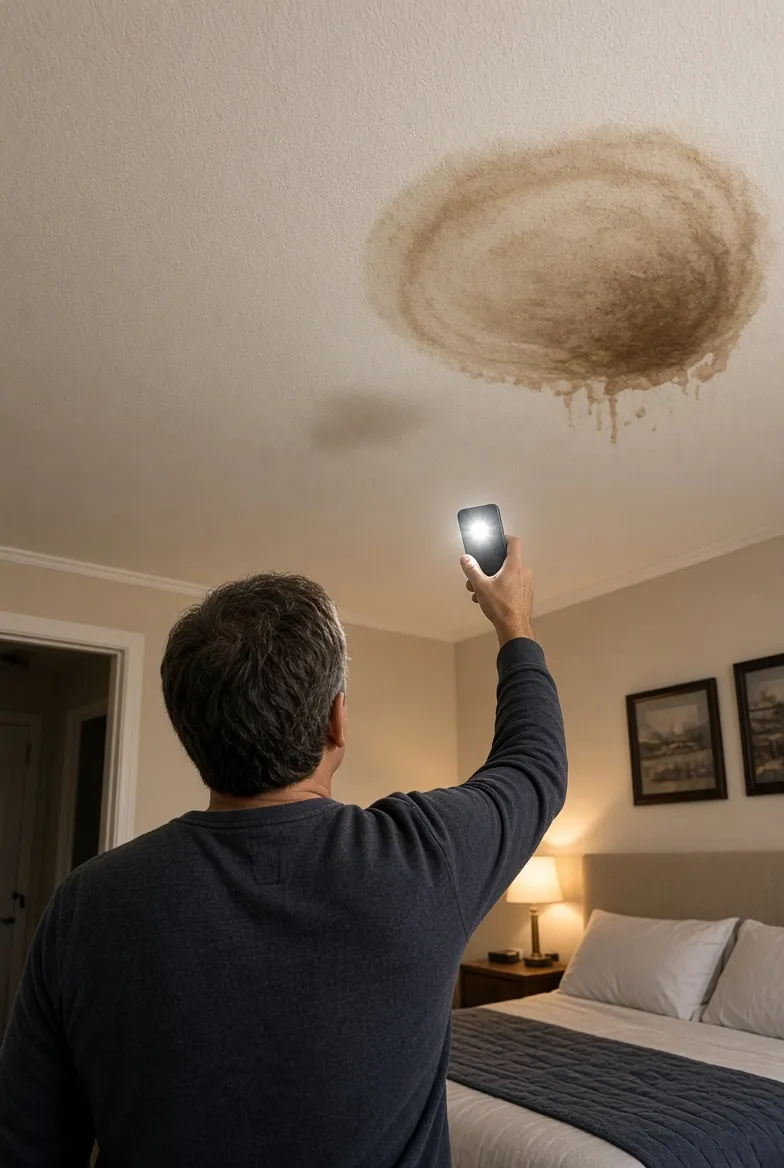
Stay off the roof. Wet shingles are slippery even at a low pitch, and a fall costs far more than any leak. From inside and on the ground you can do a lot:
- Move furniture, rugs and electronics away from the drip and set buckets or towels down.
- If water is near a light fixture or outlet, switch off that circuit at the breaker panel.
- Go into the attic with a flashlight if it’s safe to walk, stepping only on joists. Look for wet wood, drips and the highest point where water appears.
- From the ground, look for missing shingles, a dangling gutter, or a limb on the roof.
- Take photos of everything, inside and out, with the time and date visible.
What happens when the roofer arrives?
- Interior check. The roofer looks at the ceiling, walls and attic to understand how far the water has travelled and where it is coming from.
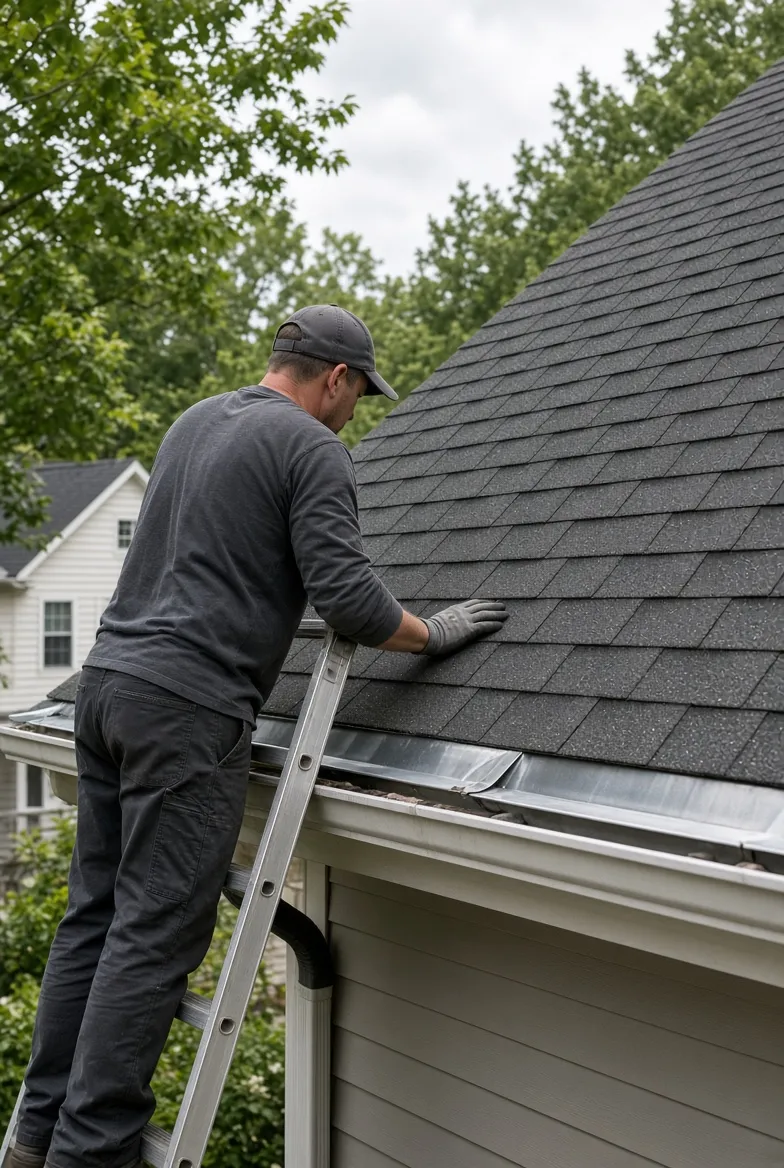
- Roof inspection, if safe. They inspect the area above the leak, the flashing around nearby chimneys, skylights and vents, and any obvious storm damage.
- Temporary protection. A tarp, membrane patch or sealant goes on to stop water for now. You should be able to see where it was placed and how it is secured.
- Explanation. You get a plain account of what failed, what was done temporarily, and what the permanent repair involves.
- Permanent repair plan. A written estimate for the lasting fix, which may include flashing repair, shingle replacement or decking repair, scheduled for dry weather.
What affects the cost of an emergency roof leak repair?
| Factor | Why it matters |
|---|---|
| Time of the call | Nights, weekends and active storms can carry a higher call-out charge. |
| Roof pitch and height | Steep or two-story roofs need more safety equipment and time. |
| Size of the damaged area | A single lifted shingle is quick; a large opening needs a full tarp. |
| Temporary vs permanent work | Emergency protection is usually billed separately from the final repair. |
| Hidden damage | Wet or rotted decking found under the shingles adds material and labor. |
When is a roof leak truly an emergency?
Treat it as an emergency when water is entering faster than you can catch it, when it is near electrical fixtures, when a ceiling is bulging, or when there’s a visible opening in the roof. Each of those can turn a small repair into drywall, insulation and electrical work within hours.
A slow stain that hasn’t grown since the last rain is still worth fixing soon, but it can usually wait for a scheduled visit. If storm wind did the damage, the storm damage repair page covers what to document for your insurer.
Questions
Emergency Roof Leak Repair FAQs
Can a roof be repaired while it's still raining?
A full, permanent repair usually can't. Shingles, sealants and underlayment need a dry surface to bond. What can happen in the rain is temporary protection, a tarp or a membrane patch fastened over the problem area, done only when the wind and lightning make it safe to be on the roof.
How long can an emergency tarp stay on a roof?
A properly fastened, heavy-duty tarp is a short-term measure meant to hold until the permanent repair, typically days to a few weeks. Sun, wind and trapped moisture wear tarps out, so book the proper repair as soon as the roof is dry.
Should I poke a hole in a bulging ceiling?
If the bulge is small and you can reach it safely, many professionals suggest puncturing the lowest point with a screwdriver over a bucket so water drains in a controlled way instead of collapsing the drywall. Stay clear of light fixtures and turn off power to that circuit first.
Will homeowners insurance cover an emergency roof leak?
Coverage depends on your policy and the cause. Sudden damage from a storm is treated differently from wear and tear. Take dated photos before anything is moved, keep receipts for tarps and cleanup, and call your insurer. The roofer can explain what they found, but only the insurer decides coverage.
What information should I have ready when I call?
Where the water appears inside, roughly when it started, what the weather was, the age of the roof if you know it, and whether you can safely see the roof from the ground. Photos on your phone help the provider plan the visit.
Is an emergency call more expensive than a scheduled repair?
It can be. After-hours visits, wet-weather work and temporary materials add cost, and a temporary fix is usually followed by a permanent one. Ask the provider how they price the emergency visit before work begins.
Related repairs and areas
Water coming in?
Get emergency roof leak repair help in Severna Park today
Call and describe what you're seeing. You'll be connected with a local roofing provider who can look at it.
(773) 302-2292