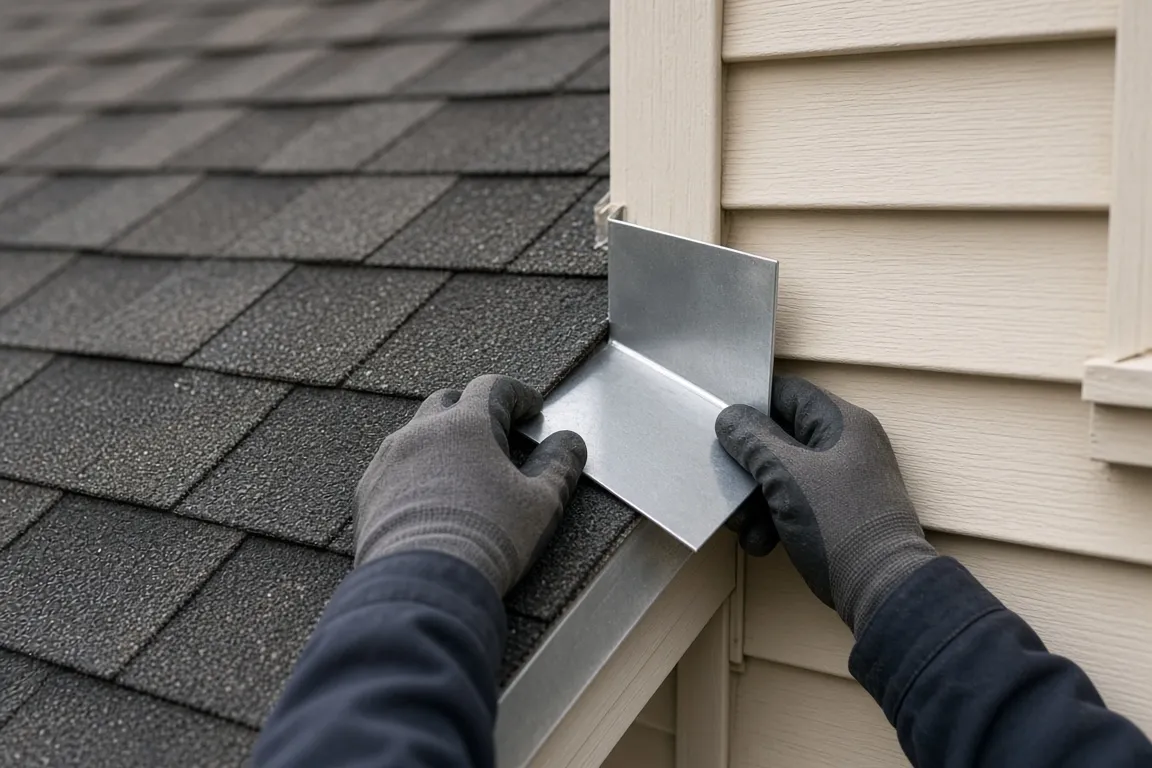
Step flashing runs where a roof slope meets a side wall. It’s a series of L-shaped pieces, one per shingle course, each overlapping the one below. To repair it properly the roofer lifts the shingles along the wall, removes damaged pieces, and weaves new ones in course by course. The siding or trim usually covers the upright leg, so some siding may need to come off.
Leak repair · Severna Park, MD
Roof Flashing Repair in Severna Park, MD
Flashing is the thin metal that seals every place a roof meets something else. It's also where most leaks begin. Here's how it fails and how it's fixed properly.
Calls only, no forms Severna Park-area provider Leak repair, nothing else Free to call, no obligation
What is roof flashing repair?
Roof flashing is thin, bent metal (usually aluminum, galvanized steel or copper) installed wherever the roof surface meets something that interrupts it: a wall, a chimney, a skylight, a valley between two slopes, or the edge of the roof. Shingles shed water well across an open slope, but they can’t seal those joints. Flashing does, by laying metal in overlapping layers so water is always directed down and out.
Flashing repair means re-securing, re-sealing or replacing those metal pieces when they stop doing their job. On many homes it is the single most common source of leaks, which is why any honest guide to Severna Park roof leak repair starts here. A roof can have perfectly good shingles and still leak at one bad joint.
How does flashing repair work?
The method depends on which type of flashing has failed.
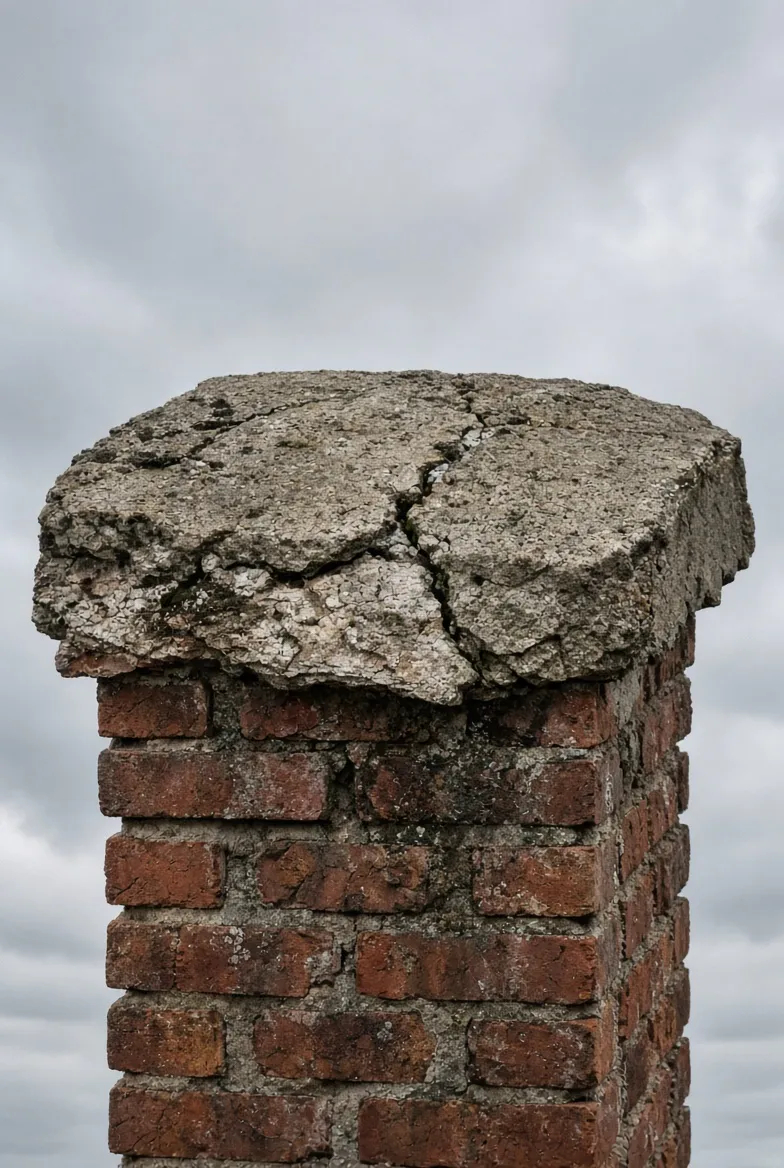
Counter flashing covers the top of the step or base flashing on masonry. On a chimney it’s set into a cut in the mortar joint and sealed. When the mortar cracks or the metal pulls out, water runs straight down behind it. Chimney leak repair covers that detail in depth.
Kick-out flashing sits at the lowest point of a roof-to-wall joint and diverts water into the gutter. If it is missing, the roofer adds one; it’s a small part with a big effect.
Valley flashing lines the trough where two slopes meet. Open metal valleys can rust through or get damaged by debris; the fix is replacing the valley metal and resetting the shingles that overlap it.
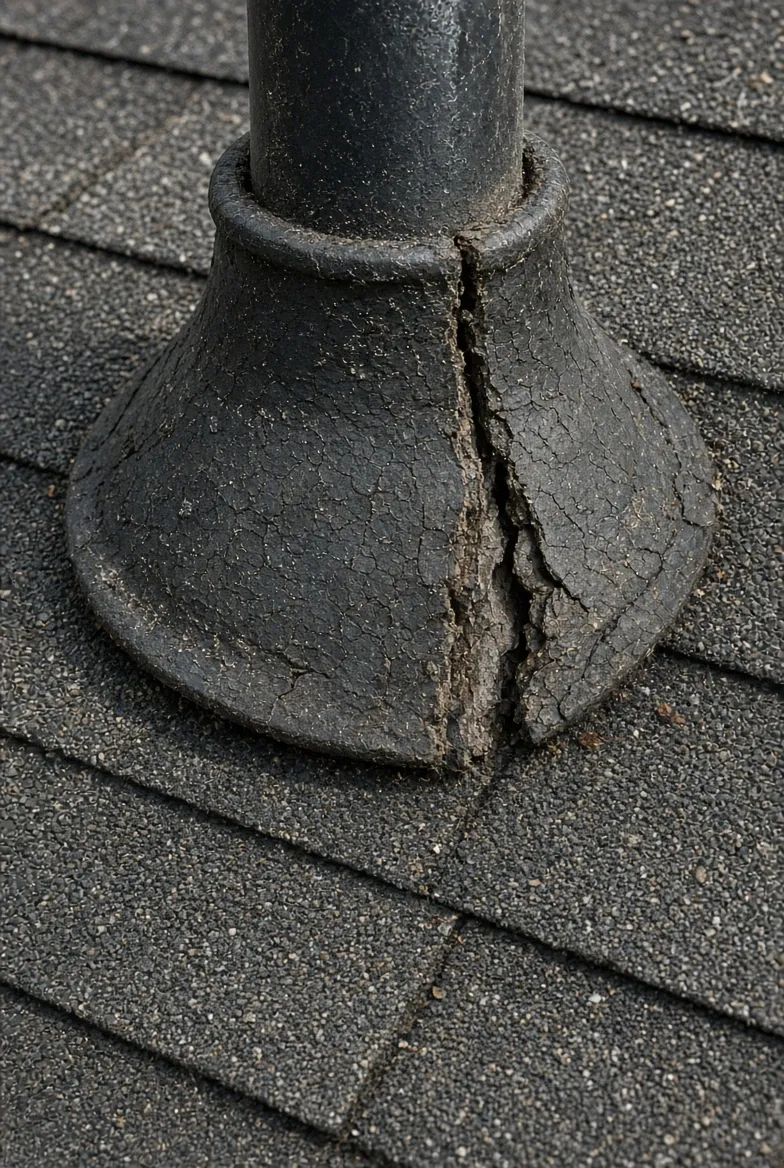
Pipe and vent flashing is a related detail with its own page: roof vent leak repair.
What are the warning signs of failing flashing?
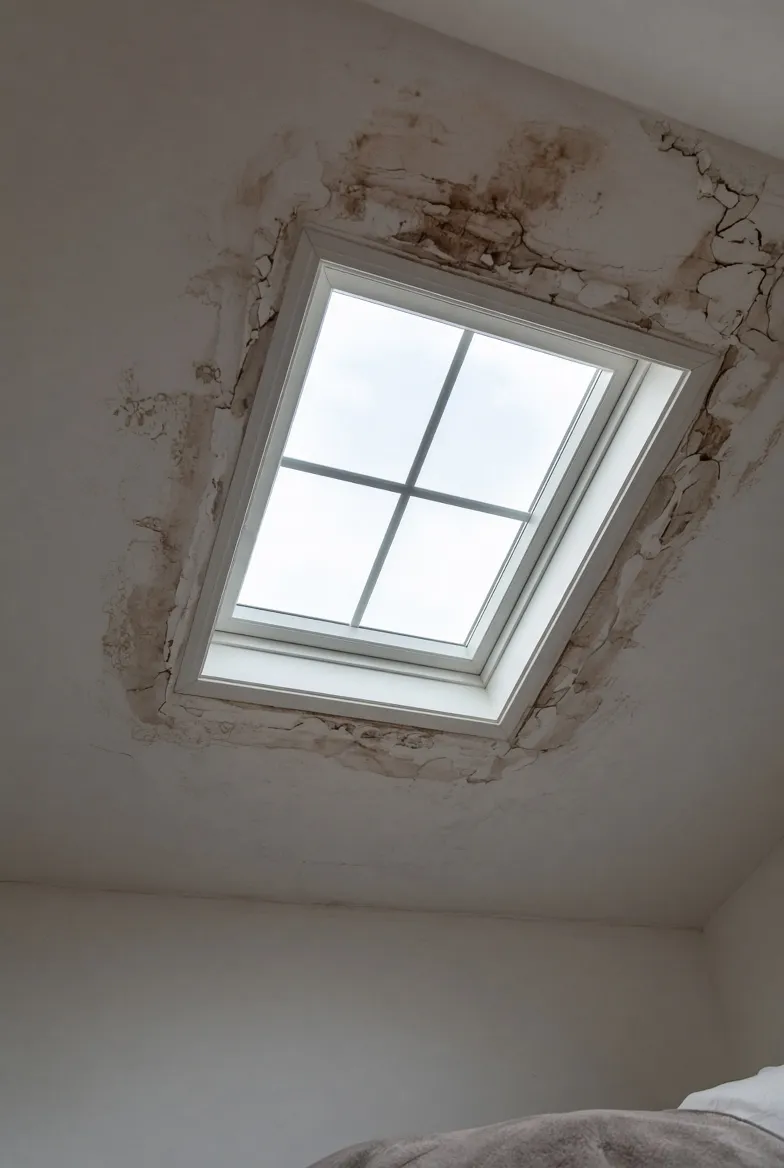
- A ceiling or wall stain directly below where a roof meets a wall or dormer.
- Leaks that appear only in wind-driven rain, not gentle rain.
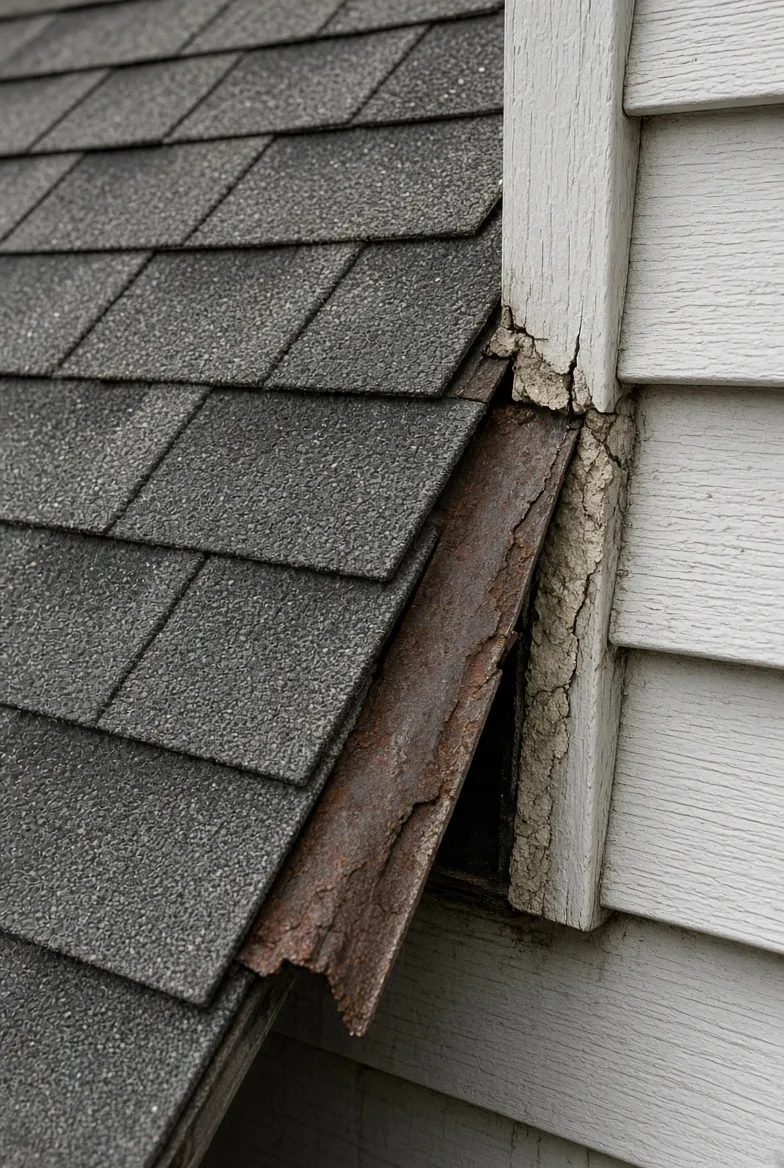
- Rust streaks running down the roof from metal edges.
- Flashing visibly lifted, bent or pulled away from the wall or chimney.
- Cracked, dried or missing sealant along the top edge of metal pieces.
- Soft, stained or rotting siding just below a roof-to-wall joint.
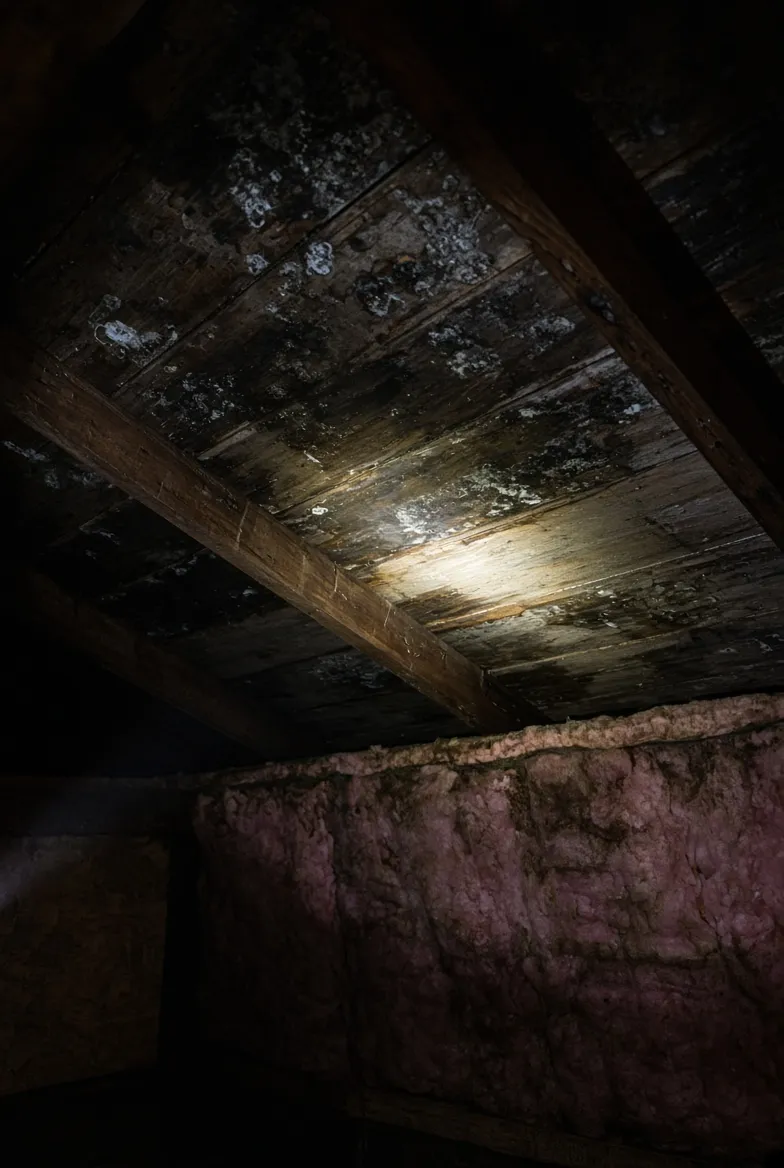
- Water stains on attic rafters next to a chimney or side wall.
- Caulk piled on in layers, a sign of repeated quick fixes.
What causes flashing to fail?
Flashing fails for four main reasons. The first is age and corrosion. Galvanized steel eventually rusts, and the moist air around the Severn and Magothy rivers doesn’t help. The second is movement. Roofs, chimneys and walls expand and contract at different rates through Maryland’s hot summers and freezing winter nights, and that movement slowly pulls fasteners and cracks sealant.
The third is bad installation: step flashing replaced with one long bent strip, flashing nailed in the wrong place, or old flashing reused under new shingles. The fourth is storm damage. Wind from a nor’easter can lift a loose piece, and once the edge is open, water gets driven behind it.
What can you safely check yourself first?
From the ground, use binoculars or your phone’s zoom to look at every joint where the roof meets something. Look for bent, lifted or rusty metal and missing sealant. Inside, check the ceilings and walls on the floor below those joints, and look in the attic along the side walls and around the chimney for dark, damp wood.
If you have a two-story home with a lower roof against a wall, check the siding just below the bottom of that joint. Stains or soft spots there often mean a missing kick-out flashing.
What happens when the roofer visits?
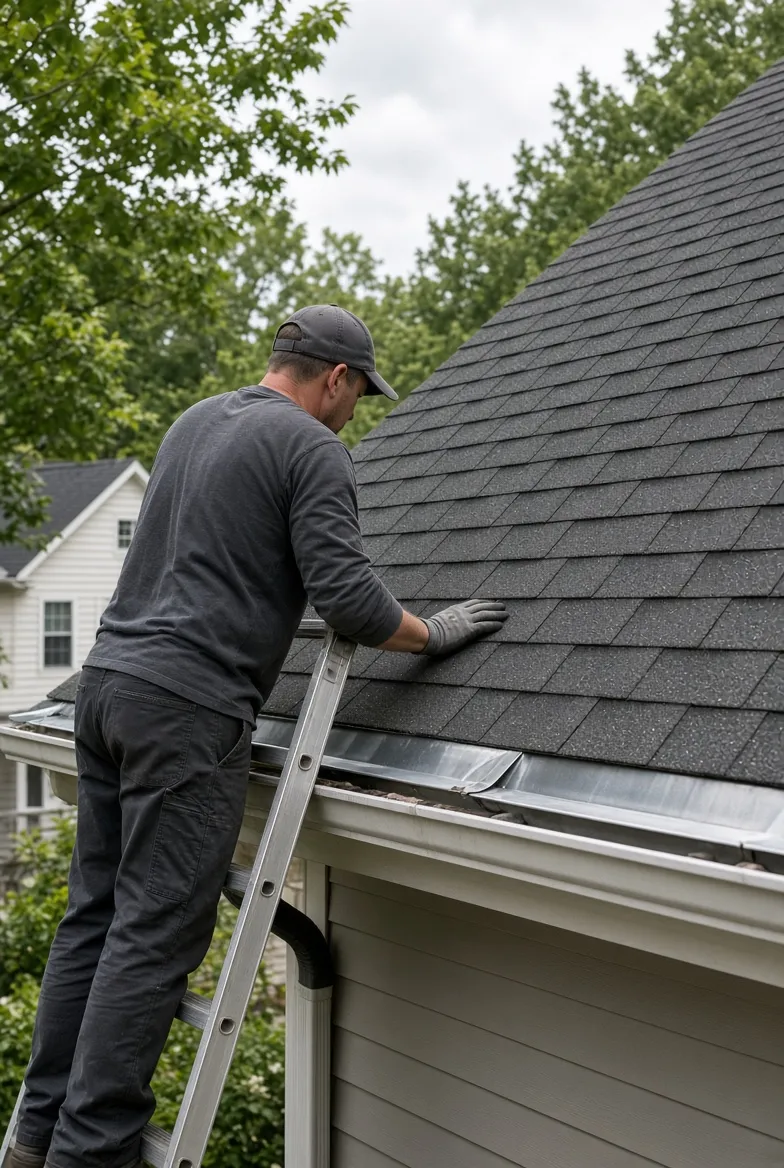
- Interior review. The roofer matches the inside stain to the roof feature above it and checks the attic for the wet path.
- Close inspection. Each suspect joint is examined: fasteners, sealant, overlaps and whether the right kind of flashing was used.
- Testing if needed. If two joints are possible sources, a controlled water test can show which one leaks.
- Repair. Depending on the findings: re-fastening and re-sealing, replacing a section, or rebuilding the full flashing detail with new metal woven under lifted shingles.
- Finish and check. Shingles are re-sealed, siding is reinstalled, and you should get photos of the hidden work before it’s covered.
What affects the cost of flashing repair?
| Factor | Why it matters |
|---|---|
| Type of flashing | Re-sealing is quick; weaving new step flashing takes much longer. |
| Length of the joint | A short dormer wall costs less than a long two-story wall. |
| Siding removal | Walls with siding over the flashing need careful removal and reinstall. |
| Metal choice | Aluminum, galvanized steel and copper differ in price and lifespan. |
| Rot found underneath | Damaged sheathing or wall framing adds carpentry work. |
How do you keep flashing from failing again?
Good flashing is mostly about doing it right once. After a repair, a few checks keep it working.
Inspect after big wind. After a nor’easter or a strong summer storm, look at wall and chimney flashing from the ground for anything bent, lifted or loose. Wind gets under a loose edge and makes it worse each time.
Watch the sealant, not just the metal. Exposed sealant at the top of counter flashing or around fasteners dries and cracks in summer sun. Have it checked every few years and renewed before it opens up.
Ask for the right details on any roof work. Step flashing should be one piece per shingle course, and a kick-out flashing belongs at the bottom of every roof-to-wall joint. When the roof is replaced, new flashing should go in rather than old metal being reused. Asking about this up front is one of the simplest ways to avoid future leaks.
Mind the siding. Siding, trim and gutter work along a roof-to-wall joint can disturb the flashing behind it. If other contractors work on those walls, have the joint checked afterwards.
When is a flashing leak an emergency?
Most flashing leaks start slowly. That’s the danger: water can soak sheathing, insulation and wall framing for months before a stain appears. It becomes urgent when water is actively running down an inside wall, when a stain is growing during each storm, or when flashing has been torn loose by wind and is flapping.
If flashing was torn off in a storm, see what to document after storm damage before repairs begin.
Can flashing be repaired or does it have to be replaced?
Small problems, like a loose top edge or dried-out sealant on otherwise sound metal, can often be re-secured and re-sealed. Rusted, cracked or wrongly installed flashing needs replacing. Because step flashing is woven under the shingles, replacing it means lifting the surrounding shingles.
Is caulk a permanent fix for leaking flashing?
Not on its own. Sealant is part of a good flashing detail, but if the metal is installed wrong, caulk only buys time. Sealant also breaks down in sun and temperature swings and needs checking every few years.
Why does my leak only happen in wind-driven rain?
That pattern points strongly at flashing. Rain falling straight down runs over it, but wind pushes water sideways and upward behind loose or short flashing. Walls facing the prevailing storm wind are the usual suspects.
What is kick-out flashing and do I need it?
It's a small angled piece at the bottom of a roof-to-wall joint that turns water away from the wall and into the gutter. Without it, water can run behind siding and rot the wall below. Many older homes were built without one.
Should flashing be replaced when I get a new roof?
In most cases, yes. Reusing old flashing under new shingles is a common shortcut that leads to leaks. Ask any roofer quoting new shingles how they will handle the flashing, especially the flashing around a chimney.
How long does a flashing repair take?
A small re-seal can take under an hour. Replacing step flashing along a wall or rebuilding chimney flashing is usually a few hours to a day, depending on access and what's found underneath.
Related repairs and areas
Water coming in?
Get roof flashing repair help in Severna Park today
Call and describe what you're seeing. You'll be connected with a local roofing provider who can look at it.
(773) 302-2292