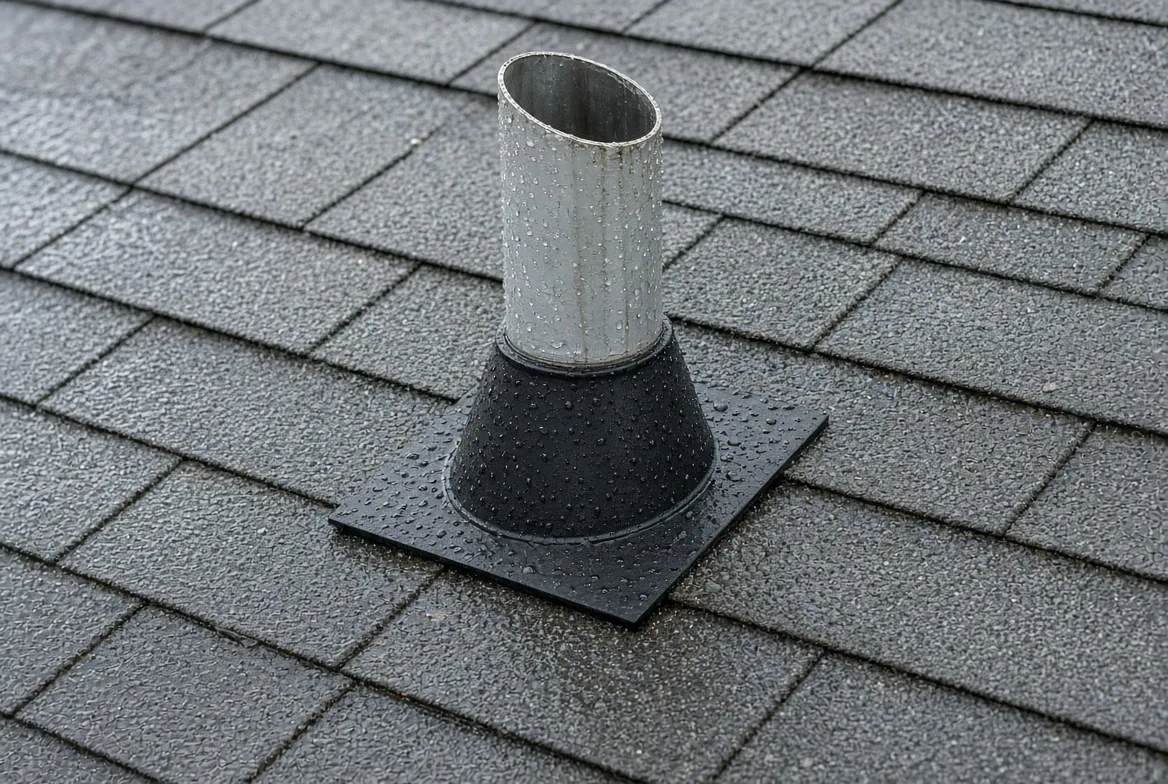
Pipe boot replacement. The roofer lifts the shingles above and around the pipe, removes the old boot, slides a new one over the pipe and fastens the base so the upper shingles overlap it and the lower edge sits on top of the shingles below. Water then runs over the flashing, not under it. Upgraded boots with metal bases or silicone collars typically outlast basic rubber.
Leak repair · Severna Park, MD
Roof Vent Leak Repair in Severna Park, MD
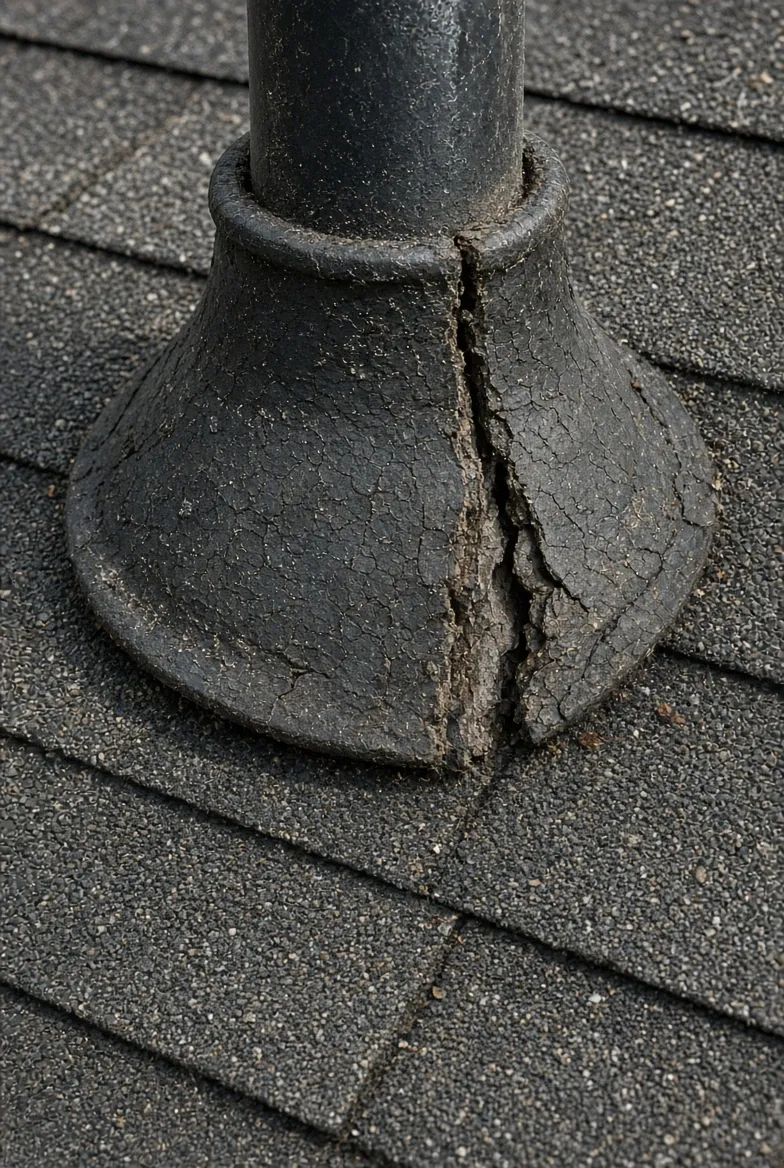
A small, round stain under a bathroom, or a drip near a pipe in the attic, often traces to a cracked rubber pipe boot. It's one of the most common leaks, and one of the simplest to fix.
Calls only, no forms Severna Park-area provider Leak repair, nothing else Free to call, no obligation
What is roof vent leak repair?
Roof vent leak repair fixes water entering where a pipe or vent passes through the roof. Every home has several: plumbing vent stacks (the round pipes that let drains breathe), box or “turtle” vents for attic ventilation, ridge vents along the peak, and exhaust caps for bathroom and kitchen fans. Each one is sealed to the roof with a flashing base, and on plumbing pipes, a rubber or neoprene collar called a pipe boot.
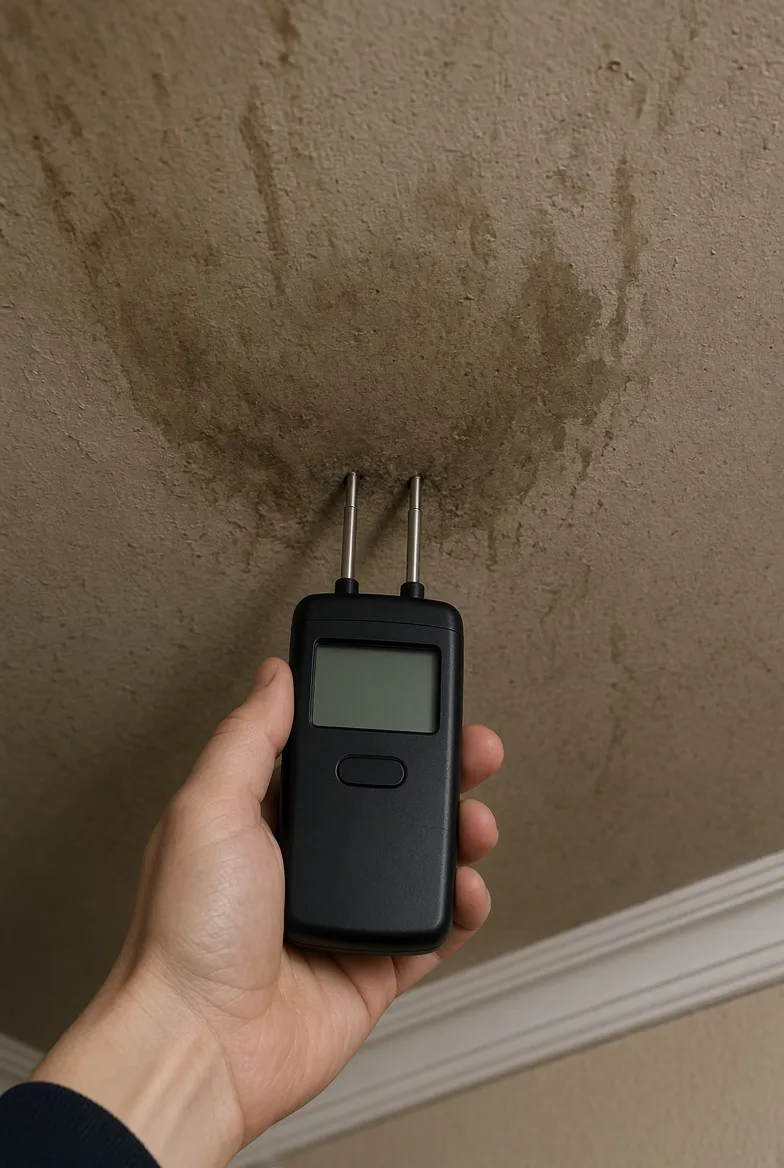
When the boot cracks or the flashing loosens, water runs down the pipe or around the base and drips into the attic. Because vents sit directly above bathrooms, kitchens and hallways, the stain usually shows up right below, often as a small round ring. These leaks are among the easiest to locate and fix, which makes them a good first suspect when fixing roof leaks around Severna Park.
How does vent leak repair work?
Box vent and exhaust cap repair. Cracked or loose plastic and metal vents are removed and replaced, with the flashing base woven into the shingles the same way. Missing or wrong fasteners get corrected and exposed nail heads are sealed.
Ridge vent repair. If wind-driven rain blows into a ridge vent, the fix may be re-fastening it, replacing a damaged section, or installing a baffled vent designed to block driven rain.
Condensation fixes. If the “leak” turns out to be condensation from a fan duct, the work is insulating the duct, sloping it correctly and making sure it actually vents outdoors.
All of these follow the same layering rule explained in roof flashing repair: upper layers over lower layers, always.
What are the warning signs of a vent leak?
- A small, round stain on the ceiling directly under a bathroom or kitchen vent.
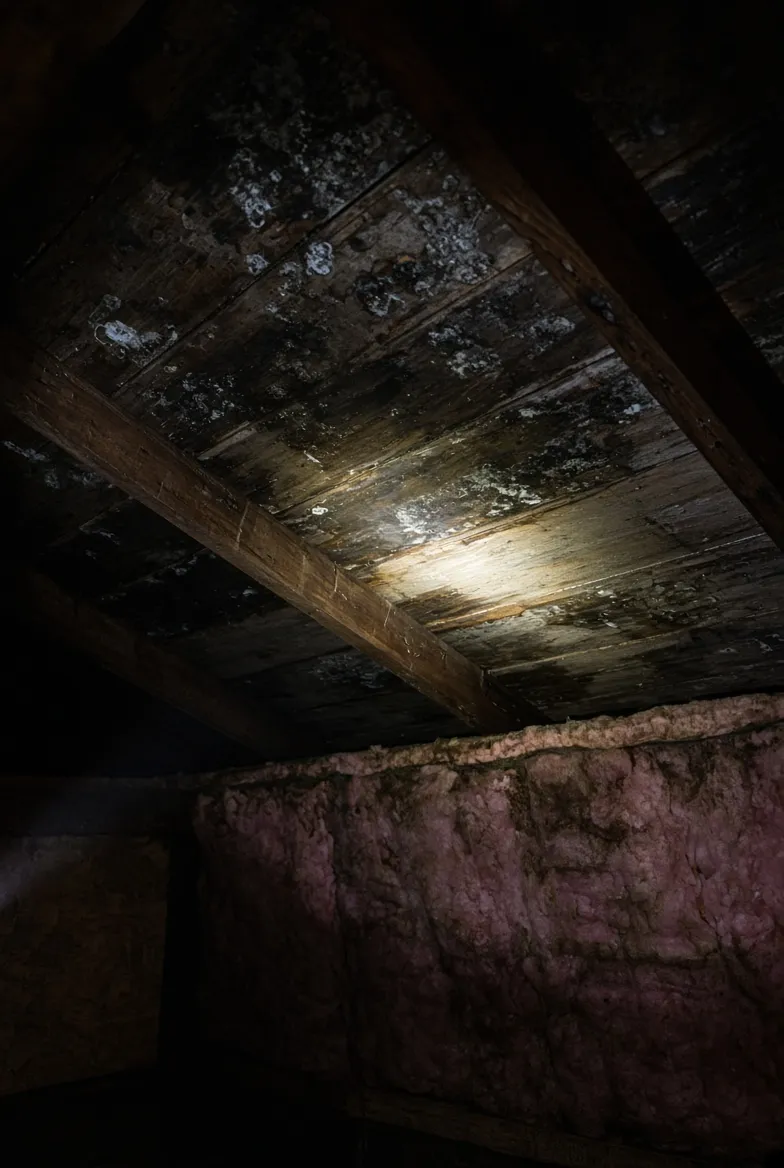
- Water marks running down a pipe in the attic.
- Drips from a bathroom exhaust fan grille.
- A cracked or split rubber collar visible around a pipe on the roof.
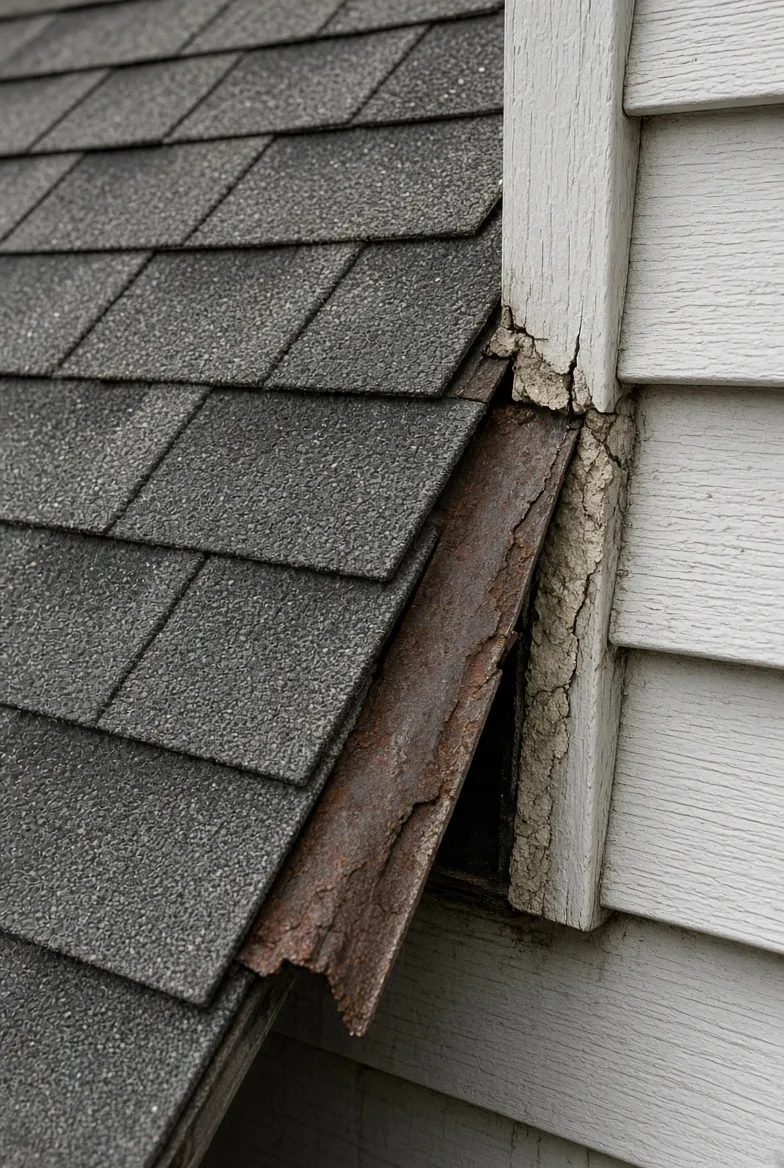
- Exposed or rusty nails at the base of a vent.
- Damp insulation in a circle around a pipe in the attic.
- Stains along the ceiling at the peak under a ridge vent after windy storms.
- A vent cap that is loose, tilted, or missing after high winds.
What causes vent leaks?
UV and age are the main causes for pipe boots. Rubber hardens and cracks after years of sun, often while the shingles around it still have life left. Installation shortcuts come next: boots set on top of shingles instead of under the upper course, or exposed nails sealed with a dab of caulk that eventually fails.
Wind lifts loose vent caps and ridge vents, and animals sometimes chew rubber boots. Movement in the plumbing stack can tear older collars. Finally, condensation from bathroom fans venting into a cold attic, or ducts that aren’t insulated, mimics a leak, especially in winter.
What can you safely check yourself first?
In the attic, find the pipe or vent above the stain. Look for wet wood around it, water marks on the pipe, or damp insulation. Check whether bathroom fan ducts are connected and actually run to the outside, not just into the attic.
From the ground, use binoculars or your phone’s zoom to look at the boots around each pipe. Cracks and gaps between the rubber and the pipe are often visible.
What happens when the roofer visits?
- Match stain to vent. The roofer checks the attic to confirm which pipe or vent is involved.
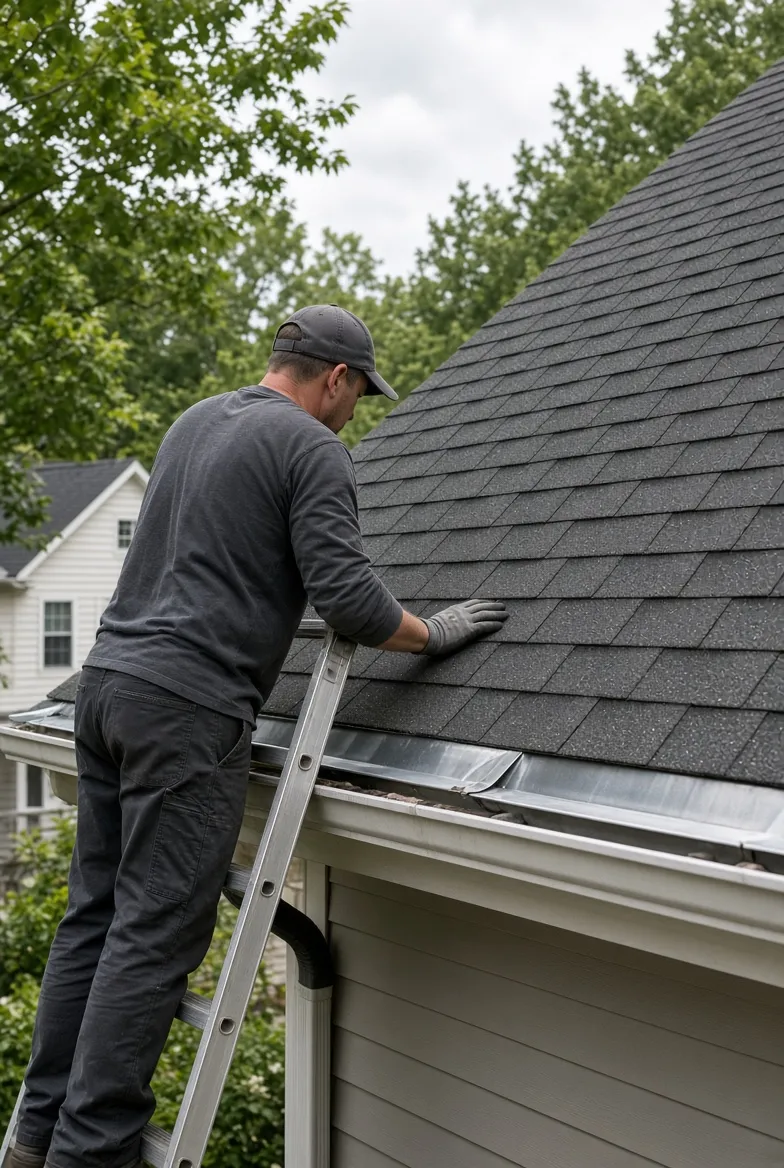
- Inspect on the roof. Boots, flashing bases, fasteners and surrounding shingles are examined.
- Replace the failed part. The boot or vent is replaced and woven correctly into the shingles.
- Check the neighbors. Other boots of the same age are inspected, since they often fail around the same time.
- Confirm and photograph. You see before and after photos of the vent.
What affects the cost of vent leak repair?
| Factor | Why it matters |
|---|---|
| Number of vents | Replacing several boots at once is more efficient than separate visits. |
| Boot or vent type | Basic rubber, metal-base and silicone boots differ in price and life. |
| Roof pitch | Steeper roofs need more safety setup. |
| Shingle condition | Brittle shingles may need replacing when lifted. |
| Attic damage | Wet insulation or stained decking may need attention. |
How do you prevent vent leaks?
Vents are small parts that do a lot of work, and a little attention goes a long way.
Check boots from the ground every year. With binoculars or a zoomed photo, look at the collar around each plumbing pipe. Cracks, gaps between the rubber and the pipe, or a collar that has slid down are all signs it’s time to replace it.
Replace boots in sets. Boots installed at the same time usually wear out at about the same time. When one fails, ask whether the others are close behind; replacing them together saves a second visit.
Choose longer-lasting parts. Boots with metal bases, or collars made from silicone or lead, generally hold up better to sun than basic rubber. Ask about options when a boot is being replaced.
Make sure fans vent outdoors. Bathroom and kitchen fans should run through an insulated duct to a proper roof cap or wall vent, not just into the attic. This prevents the condensation drips that often get mistaken for leaks.
Keep critters out. Squirrels and other animals sometimes chew rubber boots and vent screens. Trimming branches back from the roof makes it harder for them to reach.
Mind the ridge. If your roof has a ridge vent and you notice stains along the peak after windy storms, mention it on the call. A baffled vent can solve wind-driven leaks there.
When is a vent leak an emergency?
Most vent leaks are slow, but don’t ignore them. Water drips into insulation where you can’t see it, and it can rot the deck and stain ceilings over a season. Treat it as urgent if a vent cap has blown off, if water is dripping onto a light fixture, or if the stain is growing quickly.
If you can’t find which vent is responsible, a roof leak detection visit traces it methodically.
Questions
Roof Vent & Pipe Boot Leak Repair FAQs
How long do rubber pipe boots last?
Rubber boots dry out and crack from sun exposure, often well before the shingles around them wear out. That's why they're one of the most common sources of leaks on a roof that otherwise looks fine.
Can a cracked pipe boot be sealed instead of replaced?
Caulk or a slip-on rubber collar can hold briefly, but a cracked boot should be replaced. Replacement is normally quick, and you can choose a longer-lasting style with a metal or silicone collar.
Why does my bathroom exhaust fan drip water?
It can be a roof leak at the vent cap, or condensation. Warm, moist air cooling inside an uninsulated duct in a cold attic turns to water that runs back to the fan. Insulated ducts and running the fan longer help with condensation.
Can ridge vents leak?
Yes. Wind-driven rain can blow into a ridge vent that isn't baffled, was installed incorrectly or has been damaged. Leaks show up along the peak of the ceiling or attic.
Is a vent leak an emergency?
Usually not, but small leaks run directly into insulation and drywall, so don't let it go. If the vent cap blew off in a storm and water is entering, treat it as urgent and see emergency roof leak repair.
Will the roofer need to replace shingles around the vent?
Often a few shingles are lifted and re-sealed, and occasionally one or two are replaced if they crack when lifted or were damaged by water. This is normal for a boot or vent flashing replacement.
Related repairs and areas
Water coming in?
Get roof vent & pipe boot leak repair help in Severna Park today
Call and describe what you're seeing. You'll be connected with a local roofing provider who can look at it.
(773) 302-2292