Make it safe. Downed power lines, a tree on the house or a sagging ceiling come before anything else.
Leak repair · Severna Park, MD
Storm Damage Roof Repair in Severna Park, MD
After high wind, a nor'easter or a tree coming down, the first few days decide how much damage a roof does to the rest of the house. Here's what to do in order.
Calls only, no forms Severna Park-area provider Leak repair, nothing else Free to call, no obligation
What is storm damage roof repair?
Storm damage roof repair is the work needed after wind, heavy rain, falling branches or ice has damaged a roof. It usually happens in two stages: urgent protection to keep water out, then permanent repairs once the weather settles and the full extent of the damage is known.
In the Severna Park area the most common storm damage comes from wind and trees, not hail. Nor’easters bring hours of strong wind off the water, summer thunderstorms bring sudden gusts and heavy downpours, and the leftovers of tropical storms can bring both. Tall, mature trees line many local streets, and a single broken limb can do more damage than a whole season of normal weather. If you’re dealing with a leak that may or may not be storm-related, the guide to stopping roof leaks in Severna Park covers the full range of causes.
How does storm damage repair work?
Temporary protection. Open areas are covered with secured tarps or membrane patches, as described on the emergency roof leak repair page. If a tree is on the roof, a tree service usually removes it before the roof can be covered properly.
Documentation. The roofer photographs each damaged area, the attic and the interior. Good photos with notes make insurance conversations far easier.
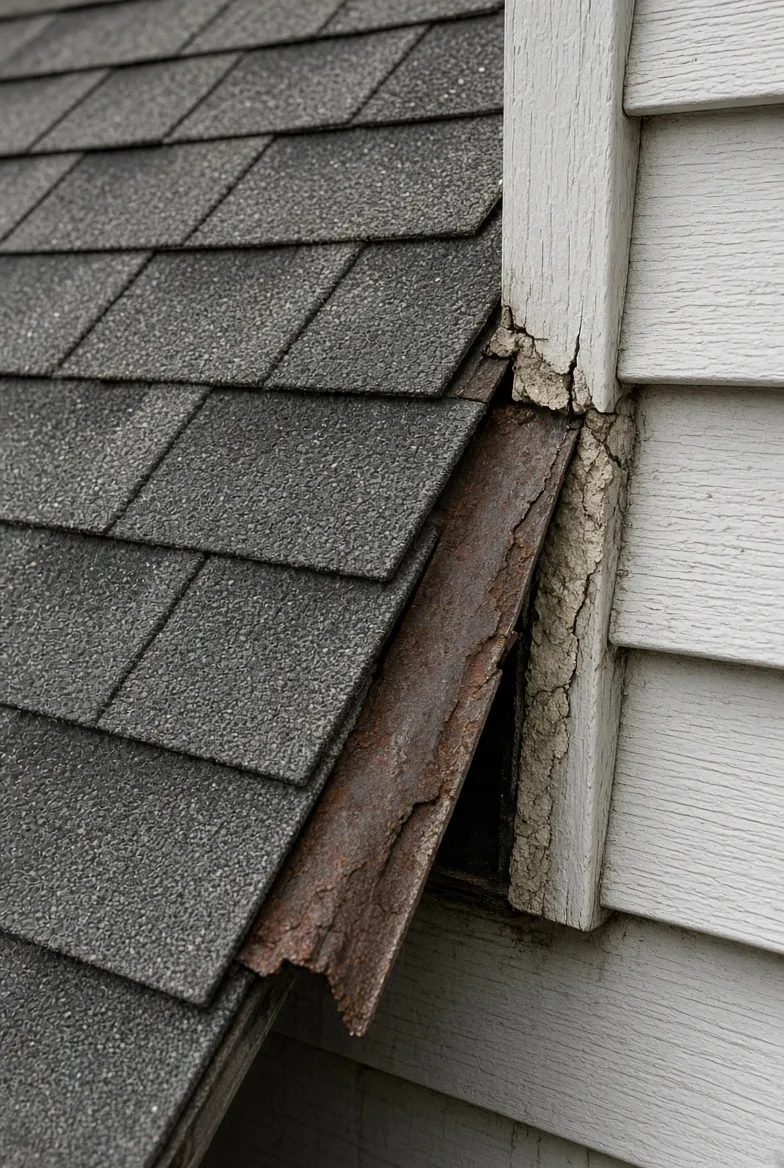
Full inspection. Once safe, the whole roof is checked, not just the obvious spot. Wind often loosens shingles on several slopes, creases them or breaks their seal strips, and lifts flashing along walls and chimneys.
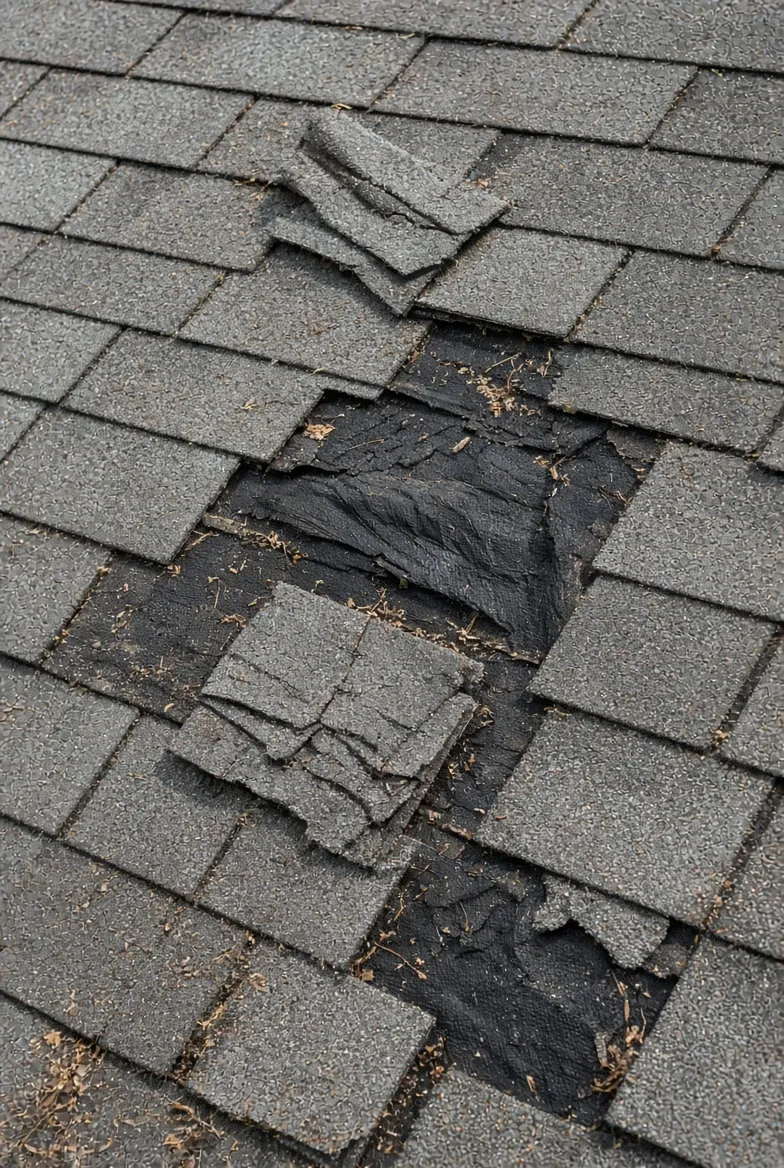
Permanent repair. Damaged shingles are replaced and re-sealed, flashing is reset or replaced, broken vents and boots replaced, and any cracked or soaked decking under the impact area is cut out and replaced. Where many areas are affected, the roofer may discuss whether a larger repair makes more sense.
What are the warning signs of storm damage?
- Shingles, ridge caps or pieces of flashing in the yard or driveway.
- Bare patches or exposed underlayment visible on the roof.
- Shingles that look lifted, creased or out of line.
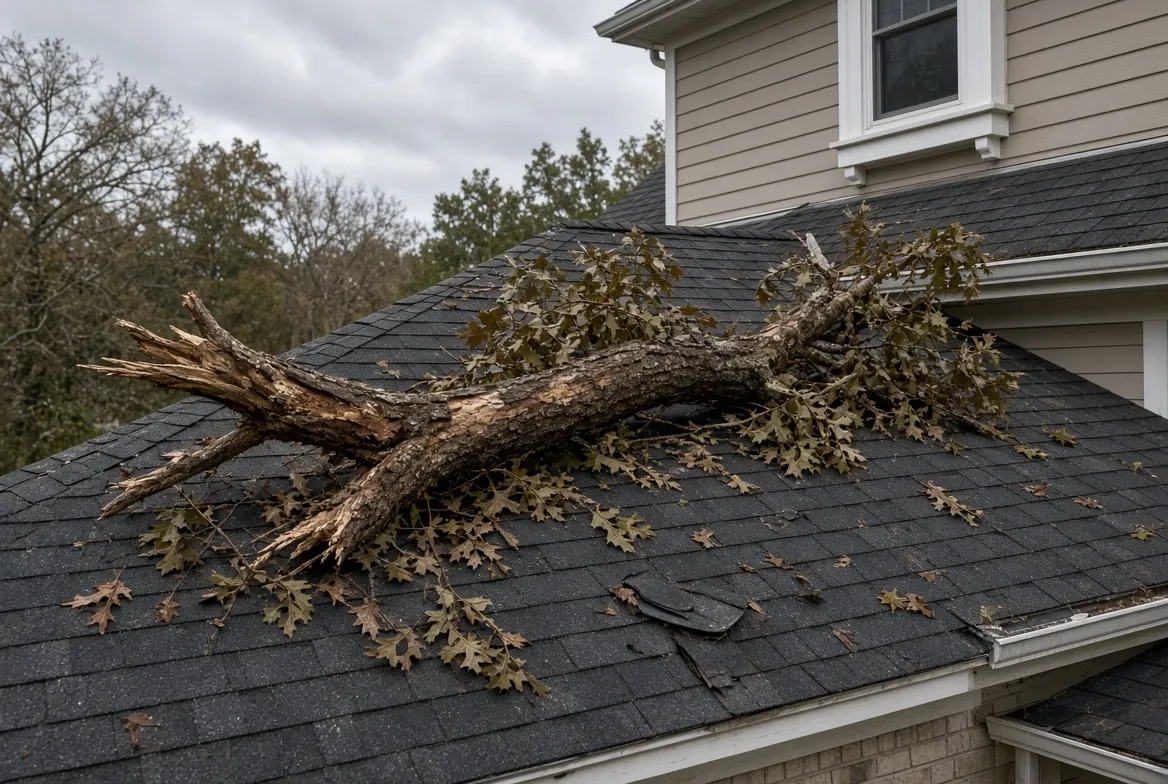
- Branches or a tree resting on the roof.
- Dented or detached gutters, downspouts or vent caps.
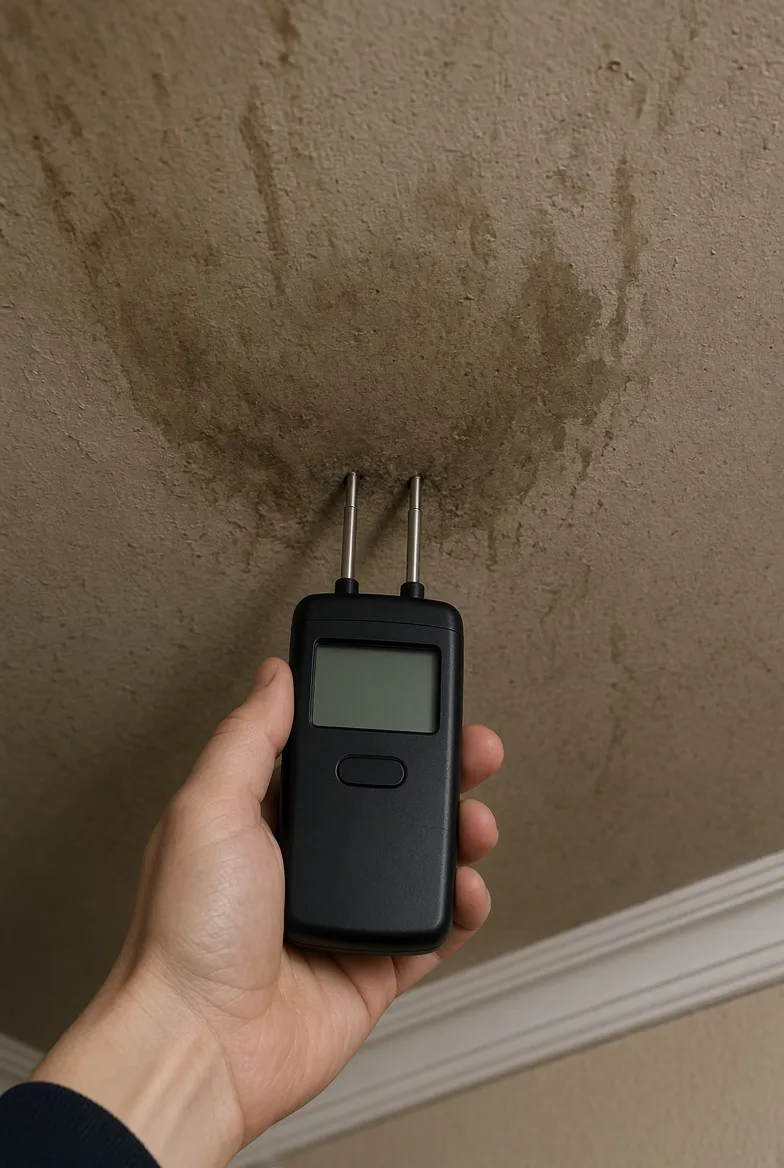
- New ceiling stains or drips that appeared during or after the storm.
- Granules piled in gutters or at downspout outlets.
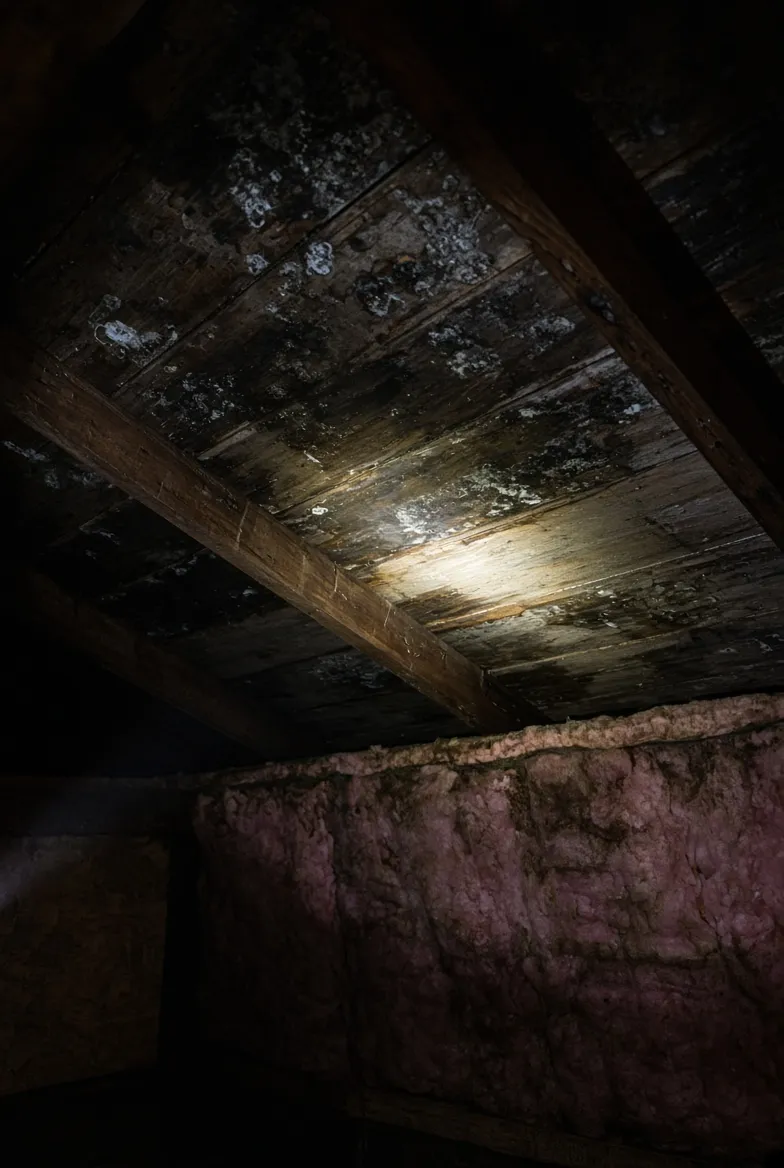
- Daylight visible through the roof boards in the attic.
What causes storm roof damage?
Wind uplift is the most common. Gusts pull up on shingle edges, especially at the roof’s edges, ridges and corners where pressure is highest. Older shingles whose adhesive has weakened go first. Falling limbs are the next big cause: they puncture shingles and decking, crack rafters and tear gutters.
Wind-driven rain pushes water under shingles and flashing that would stay dry in normal rain. Debris blown onto the roof or into valleys blocks drainage. In winter, ice and heavy snow can form ice dams at the eaves, which force meltwater back under the shingles. And occasionally hail dents metal and bruises shingles, though it’s less common here than in the Plains states.
What can you safely check yourself first?
Walk around the house from the ground once the storm has passed. Look at all four sides of the roof, the gutters, the yard and the attic. Photograph everything before any cleanup.
- Note missing or displaced shingles and any debris on the roof.
- Check ceilings and the attic for new stains or drips.
- Look at fences, siding, vehicles and outdoor items for damage too; insurers often consider the whole event.
- Keep a list of times and dates and any temporary measures you paid for.
What happens when the roofer visits?
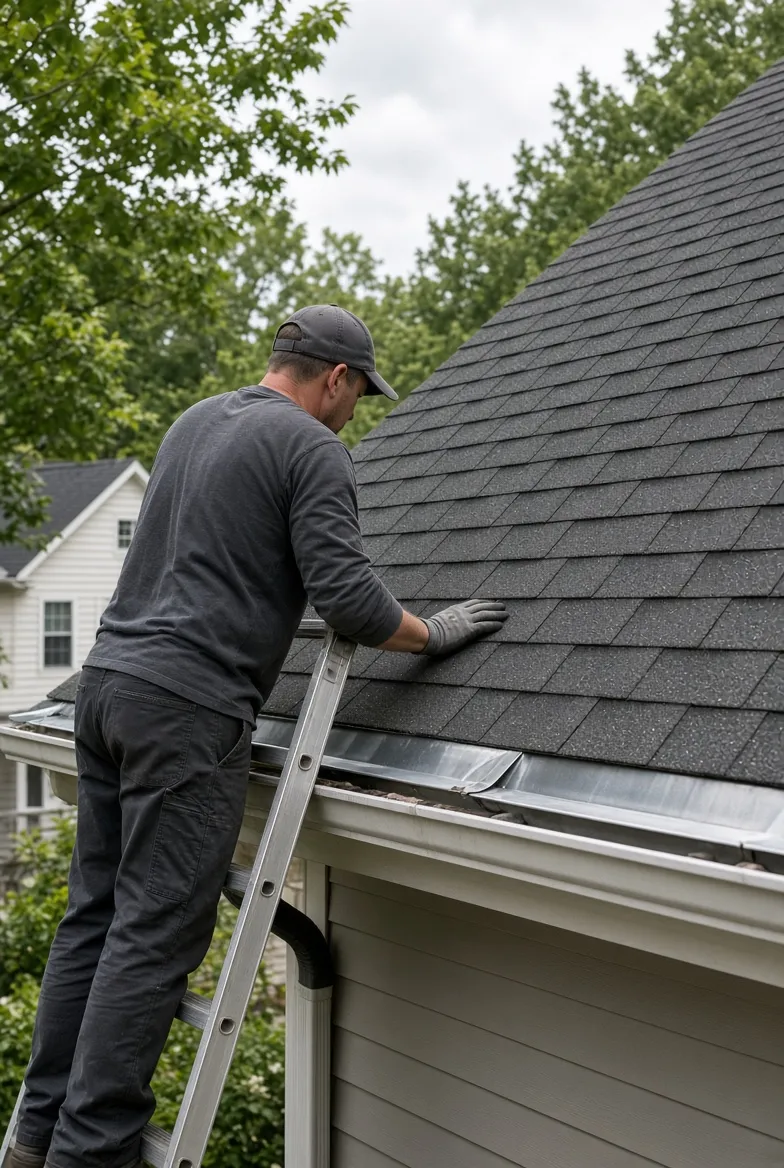
- Safety check. Hazards such as trees, power lines and weakened ceilings are identified.
- Temporary protection. Openings are covered to stop more water getting in.
- Full documentation. Damage is photographed on every slope, in the attic and inside.
- Written assessment. You get a description of what’s damaged and a repair estimate you can share with your insurer.
- Permanent repair. Shingles, flashing, vents and decking are repaired once the weather allows.
What affects the cost of storm damage repair?
| Factor | Why it matters |
|---|---|
| Extent of damage | A few shingles is a small job; multiple slopes add up quickly. |
| Decking damage | Punctured or soaked sheathing must be replaced. |
| Tree removal | Usually done by a tree service before roofing work starts. |
| Temporary work | Tarping is typically billed separately from permanent repair. |
| Matching materials | Older shingles can be hard to match, which can widen the repair. |
How do you get a roof ready for the next storm?
You can’t control the weather, but you can make the roof a harder target before storm season.
Trim trees back from the roof. Branches that overhang the roof or touch it are the biggest local storm risk. Have dead limbs and anything hanging over the house trimmed by a tree service, especially large limbs above bedrooms and living areas.
Keep gutters and valleys clear. Clogged gutters overflow under the roof edge in heavy rain, and leaves in valleys hold water against the shingles. Clearing them in late fall and spring keeps water moving when a big storm hits.
Fix loose shingles early. A shingle that has lost its seal will lift further in the next gust. If you see shingles that look out of line, or tabs flapping in wind, have them re-sealed or replaced before the season of nor’easters and tropical remnants.
Check flashing and vent caps. Loose metal is what wind grabs first. A quick look from the ground at chimney and wall flashing, vent caps and ridge vents is worth doing every spring.
Know your policy. Read the roof section of your homeowners policy before you need it. Note your deductible and any rules about reporting damage promptly.
Keep basic supplies. A couple of large buckets, old towels, a flashlight and a phone charger make the first hour of a storm leak much easier. Save the phone number for help in your contacts now, so you’re not searching for it in a power cut.
When is storm damage an emergency?
It’s an emergency when a tree or limb has broken through the roof, when large sections of shingles are missing, when water is coming in quickly, or when a ceiling is sagging. Act quickly but safely.
If the source of a new leak after a storm isn’t obvious, roof leak detection helps find all the damaged areas, not just the first one.
How do I know if a storm damaged my roof if nothing is leaking yet?
Look from the ground for missing or lifted shingles, shingle pieces in the yard, bent flashing, dented gutters or vents, and branches on the roof. Wind can break the seal strip under shingles without removing them, so a closer inspection may find damage you can't see.
Should I call my insurer or a roofer first?
If water is getting in, get temporary protection first and keep receipts. Then contact your insurer promptly. Having a roofer document the damage helps you describe it, but the insurer decides what's covered.
What photos should I take after a storm?
Wide shots of each side of the house, close-ups of visible damage from the ground, debris in the yard, interior stains and wet areas, and the date. Don't climb onto the roof to take them.
Will the roofer meet my insurance adjuster?
Some providers will, if you ask and it's part of their service. It's their decision, so ask directly when you're connected. Either way, the provider's photos and notes are useful to share with the adjuster.
Can wind damage shingles without blowing them off?
Yes. Strong gusts can lift shingles enough to break their adhesive seal or crease them. They may lie back down and look normal, but they're now loose and more likely to leak or blow off in the next storm.
Is it safe to stay in the house with a tree on the roof?
If a large limb or tree has broken through the roof, leave that part of the house and keep people away until it's assessed. Tree removal often needs a tree service before roof repairs can start.
Related repairs and areas

Water coming in?
Get storm damage roof repair help in Severna Park today
Call and describe what you're seeing. You'll be connected with a local roofing provider who can look at it.
(773) 302-2292