Find the actual source. Water on a low-slope roof often travels under the membrane or along the deck before it shows inside. The roofer inspects seams, edges, drains and penetrations and looks for blisters, splits and soft spots underfoot that suggest wet insulation.
Leak repair · Severna Park, MD
Flat Roof Leak Repair in Severna Park, MD
Porches, additions, dormers and garages often have a flat or low-slope section. Water moves slowly on those roofs, so the details matter even more.
Calls only, no forms Severna Park-area provider Leak repair, nothing else Free to call, no obligation
What is flat roof leak repair?
Flat roof leak repair covers leaks on low-slope roofs: roofs with little or no visible pitch, such as porch roofs, sunroom and kitchen additions, dormer tops, garages and some modern homes. They’re not perfectly flat; a good low-slope roof still has a gentle fall toward drains, scuppers or gutters. But water moves slowly across them, so a small gap leaks much more than it would on a steep shingle roof.
These roofs are usually covered with a single-ply membrane (EPDM rubber or TPO) or with modified bitumen roll roofing. Each material has its own weak points and its own repair methods, so the first job is identifying what’s on the roof. If your main roof is shingle and only a porch or addition is flat, start with this page; for everything else, see leaking roof help in Severna Park.
How does flat roof leak repair work?
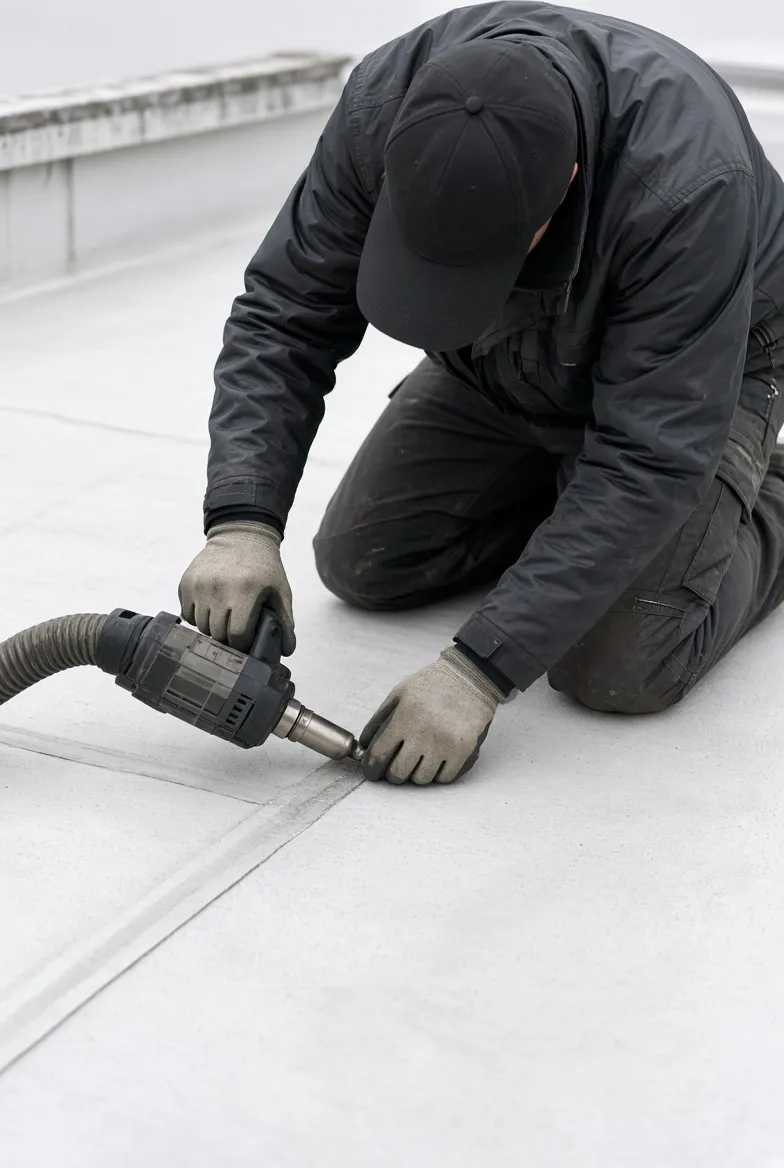
Repair the membrane with matching materials. On EPDM, seams are cleaned, primed and re-sealed with seam tape or cover strips, and punctures get a patch. On TPO, seams and patches are heat-welded with a hot-air tool. On modified bitumen, blisters are cut out and patched in layers, and open laps are re-sealed. Mixing incompatible materials, such as asphalt products on a rubber roof, causes new failures, so ask what will be used.
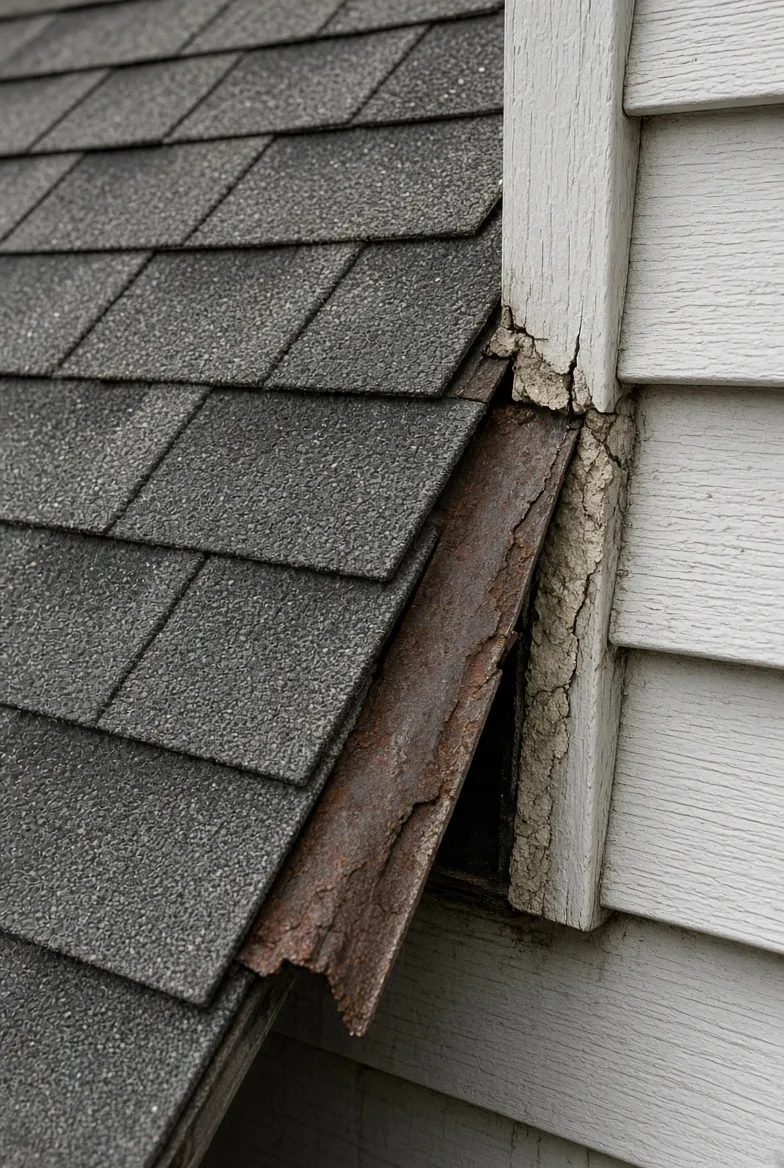
Fix the details. Many low-slope leaks start where the flat roof meets a wall or the main roof. That transition needs proper flashing, the same principle covered in roof flashing repair. Drains, scuppers and pipe penetrations get new boots or flashing as needed.
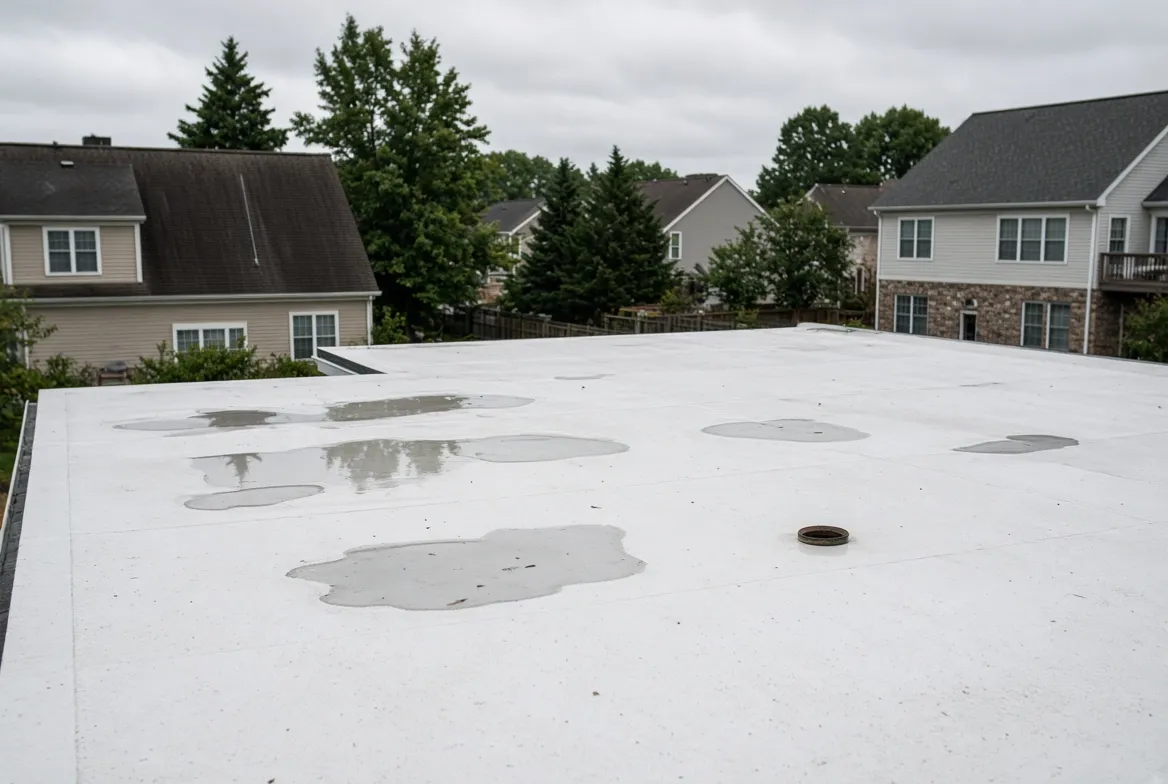
Address ponding. If water sits for days, the roofer may suggest tapered insulation, adding a drain or adjusting the edge so water runs off.
What are the warning signs of a flat roof leak?
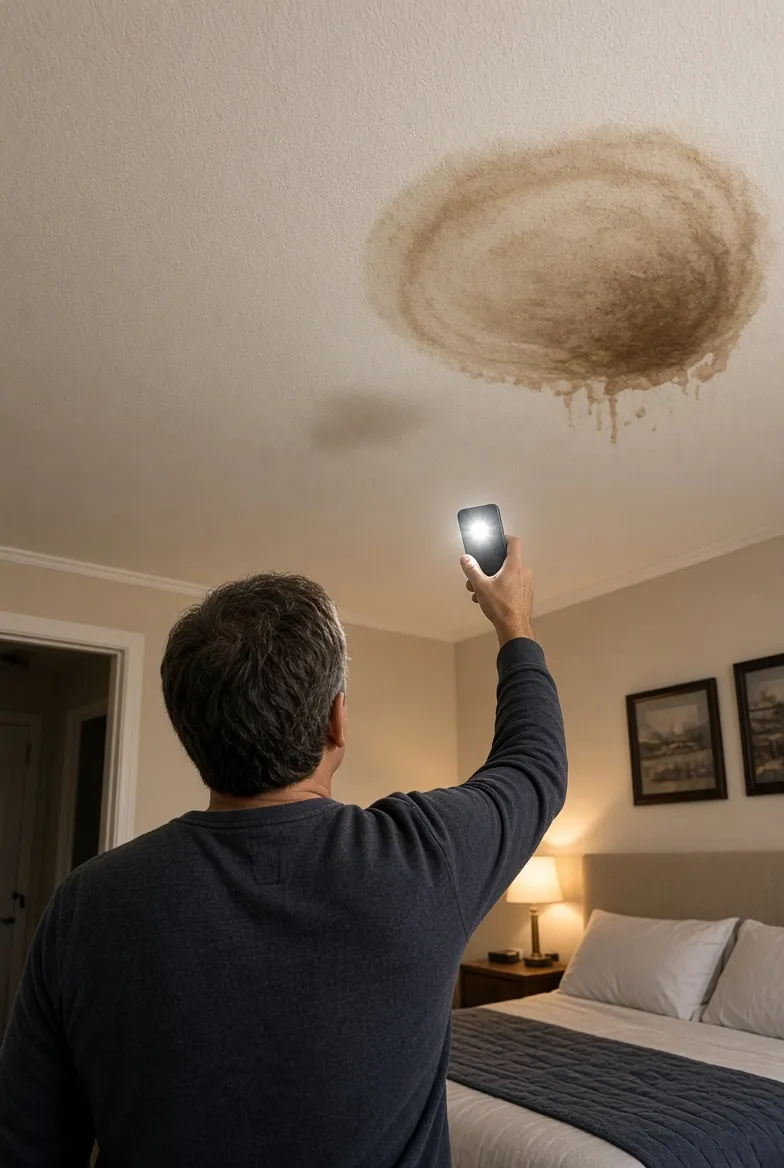
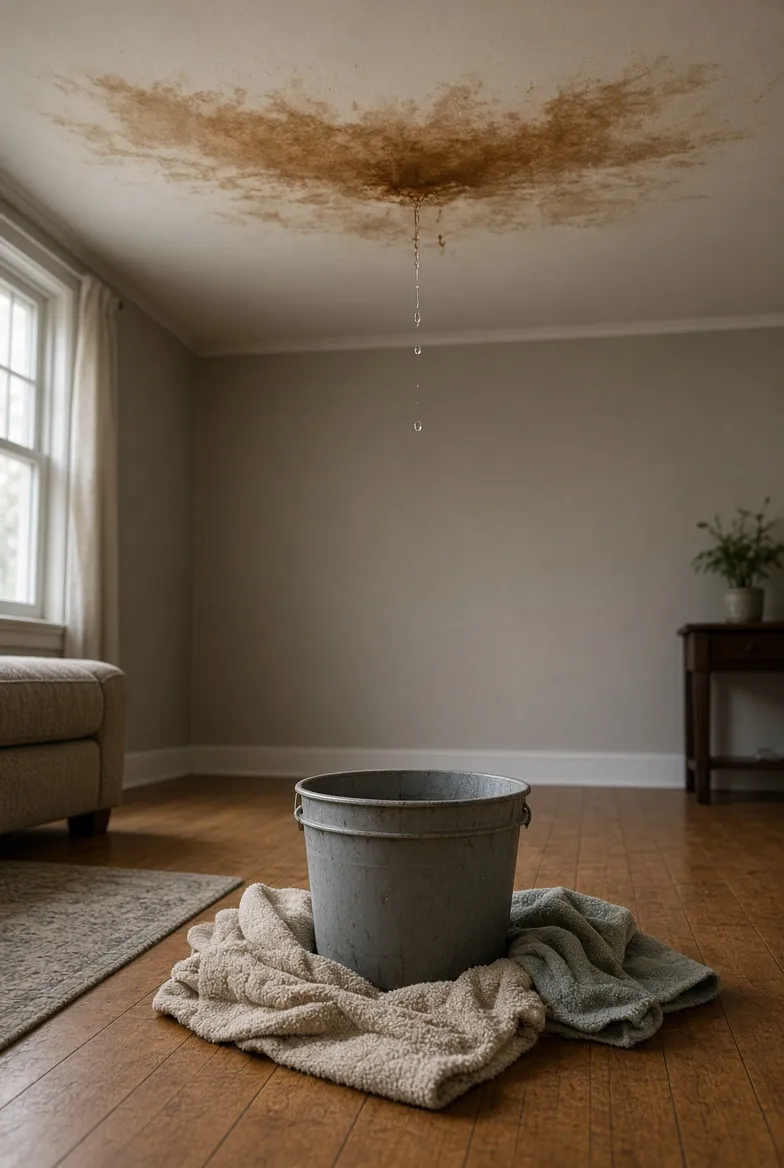
- Ceiling stains in the room under a porch roof, addition or dormer.
- Puddles that remain on the roof days after the rain stops.
- Blisters or bubbles in the roofing surface.
- Seams that are lifting, open or curling at the edges.
- Cracks, splits or alligatored texture in the membrane.
- Soft or spongy areas when walking on the roof.
- Clogged drains or scuppers, or overflowing gutters at the roof edge.
- Algae, moss or dirt lines marking where water sits.
What causes flat roofs to leak?
Seams are the weak link on most membrane roofs. Adhesives and tapes age, heat and cold make the sheets expand and contract, and edges start to lift. Ponding water adds constant pressure on those seams and speeds up the breakdown of the surface.
Sun and temperature swings dry out and crack older membranes. Maryland summers are hot and humid, winters bring freezing nights, and that cycle wears roofing materials. Debris from nearby trees clogs drains and scuppers, causing water to back up. Foot traffic and damage from contractors, satellite installs or falling branches puncture membranes. Finally, wall and edge details are frequent leak points, especially where a porch roof meets the house.
What can you safely check yourself first?
If you can see the flat section from a window or deck without climbing onto it, check for standing water, leaves piled at drains, and obvious open seams or blisters. Inside, note exactly where the stain is in relation to the outside walls and any wall that joins the main house.
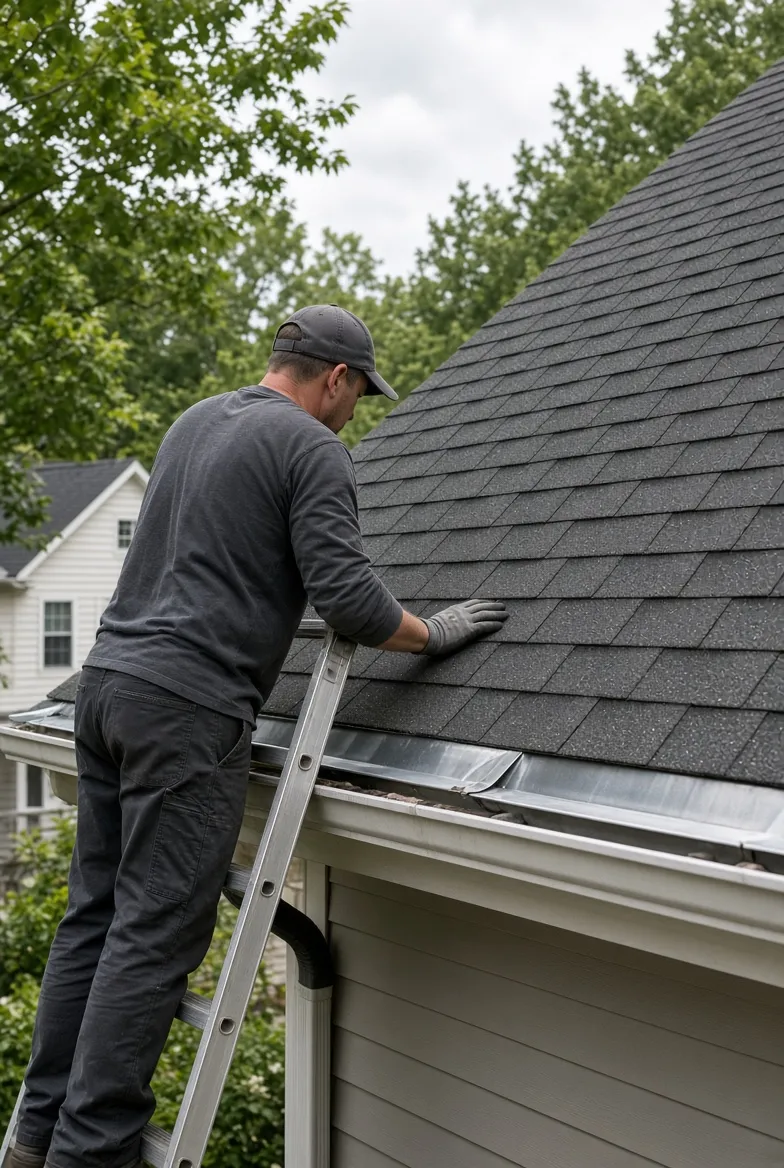
Keep drains and scuppers clear if you can reach them safely from a ladder at the edge. Never walk on a wet or icy roof.
What happens when the roofer visits?
- Identify the roof type. EPDM, TPO, modified bitumen or something else, and its approximate age.
- Inspect seams and details. Edges, wall transitions, drains and penetrations are checked closely.
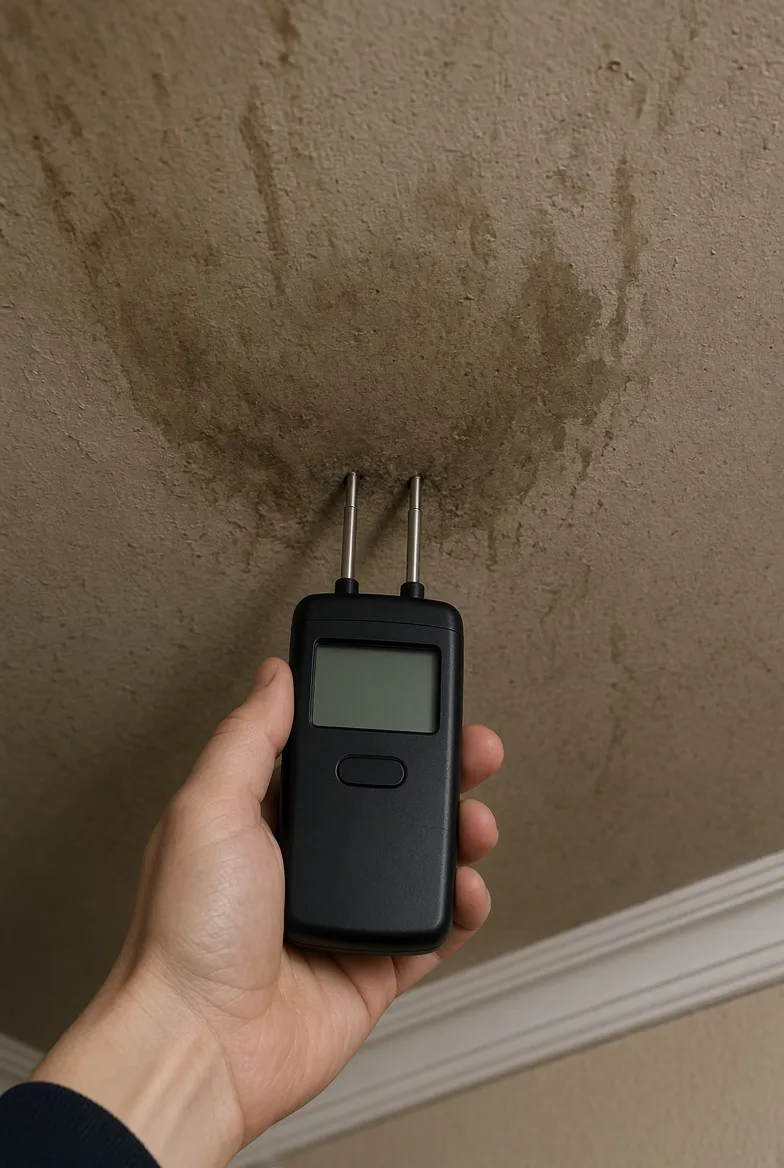
- Check for wet insulation. Soft spots or a moisture meter show how far water has spread.
- Repair. Seams are re-sealed or welded, patches applied, flashing at walls corrected, drains cleared.
- Discuss ponding and life expectancy. You should hear whether patching is enough or whether a section is near the end of its life.
What affects the cost of flat roof leak repair?
| Factor | Why it matters |
|---|---|
| Membrane type | EPDM, TPO and modified bitumen need different materials and tools. |
| Number of leak points | One open seam is quick; several failures add up. |
| Wet insulation | Soaked insulation has to be cut out and replaced. |
| Ponding correction | Adding slope or a drain is more involved than a patch. |
| Wall and edge flashing | Re-flashing the house-to-roof joint adds labor. |
How do you make a flat roof last longer?
Low-slope roofs reward a little routine attention more than any other roof type, because small problems stay small only for a short time.
Keep water moving. Clear drains, scuppers and the gutters along the low edge every spring and fall, and after any storm that brings down leaves or twigs. A blocked drain turns a light rain into standing water across the whole surface.
Look after a heavy rain. The day after a storm, check how quickly puddles disappear. Water that is still there after two days is ponding, and it’s worth asking a roofer whether the slope or a drain can be improved before it shortens the membrane’s life.
Limit foot traffic. Membranes puncture more easily than shingles. If HVAC units, satellite dishes or solar equipment sit on the flat section, ask contractors to use walk pads and to report any damage they cause.
Keep the wall joint sealed. The joint where a porch or addition roof meets the house wall is where most low-slope leaks begin. Have it checked whenever siding, windows or gutters on that wall are worked on, since those jobs often disturb the flashing.
Match materials for every repair. Ask whoever works on the roof which membrane it is and make sure patches use compatible products. Asphalt mastic on rubber roofing, for example, can break the membrane down over time.
Plan ahead for replacement. Membranes do wear out. When seams fail in several places and the surface is cracked and brittle, budgeting for a planned replacement is usually cheaper than chasing leaks every season.
When is a flat roof leak an emergency?
It’s urgent when water is dripping steadily into a room, when a ceiling below the flat section sags, or when large amounts of water are standing on the roof after a storm. Ponding water is heavy, and a sagging roof deck is a structural concern.
If the flat section is leaking during an active storm, see emergency roof leak repair for temporary protection options.
Is some standing water on a flat roof normal?
Small puddles that disappear within a day or two of rain are common. Water that sits for longer, often called ponding, speeds up wear, adds weight and finds its way through any weak seam. Persistent ponding should be corrected.
Can a flat roof leak be patched?
Usually, yes. Seams, small punctures and flashing details on membrane roofs can be patched with matching materials. If the membrane is brittle, cracked across large areas or soaked underneath, a section replacement may be the honest recommendation.
Why does my flat roof leak far from where the water shows inside?
Water can travel under a membrane or along the deck for a long way before it finds a gap in the ceiling. That's why flat-roof leaks often need careful inspection or leak detection rather than guessing.
What's the difference between EPDM, TPO and modified bitumen?
EPDM is a black rubber membrane with glued or taped seams. TPO is usually a white sheet with heat-welded seams. Modified bitumen is an asphalt-based roll roofing applied in layers. Each needs repairs made with compatible materials.
Can I coat my flat roof to stop leaks?
Roof coatings can extend the life of a sound membrane, but they don't fix open seams, wet insulation or ponding. Coating over trapped moisture can make things worse. Get the leak repaired first.
How often should a flat roof be checked?
Many roofers suggest a look each spring and fall, and after big storms, especially to clear drains and scuppers of leaves.
Related repairs and areas
Water coming in?
Get flat roof leak repair help in Severna Park today
Call and describe what you're seeing. You'll be connected with a local roofing provider who can look at it.
(773) 302-2292