Gathering the story. When does it leak: every rain, only heavy rain, only wind from one direction, only in winter? Each answer points somewhere different. Leaks in wind-driven rain suggest flashing or vents; leaks only in winter suggest ice dams or condensation.
Leak repair · Severna Park, MD
Roof Leak Detection in Severna Park, MD
The stain on your ceiling is rarely under the hole in your roof. Leak detection is the methodical work of tracing water back to where it actually gets in.
Calls only, no forms Severna Park-area provider Leak repair, nothing else Free to call, no obligation
What is roof leak detection?
Roof leak detection is the process of finding exactly where water enters a roof system. It sounds simple, but water rarely falls straight down. It enters through a gap in flashing, a lifted shingle or a cracked boot, runs along the underlayment or a rafter, and drips onto the ceiling wherever gravity and the framing send it. The stain you see can be a long way from the source.
Detection matters most when a leak keeps coming back after a repair, when it only appears in certain storms, or when there are several possible sources close together. It’s the step that makes every other repair on this site work. Our main page on roof leak repair service in Severna Park explains the common sources; this page explains how professionals prove which one is guilty.
How does roof leak detection work?
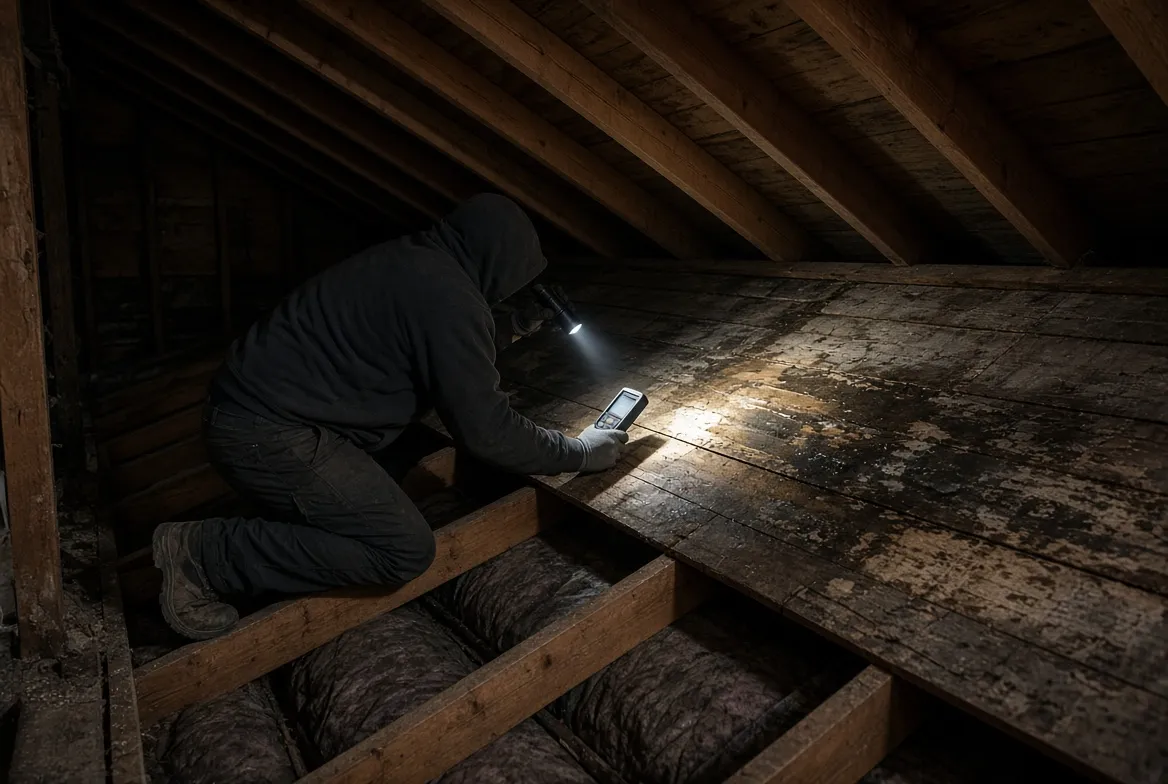
Attic tracing. With a bright light, the roofer follows the water trail uphill from the wet spot: stains on rafters, wet decking, rusty nail tips, damp insulation. The highest wet point usually sits just below the entry.
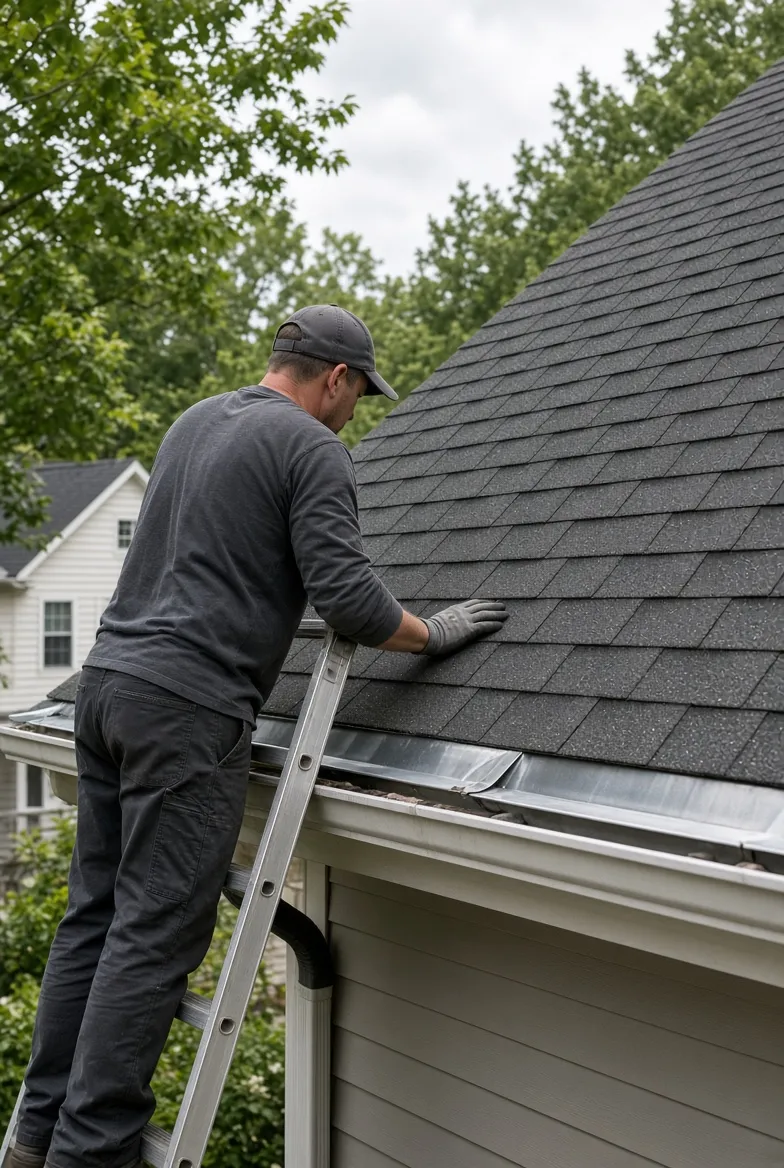
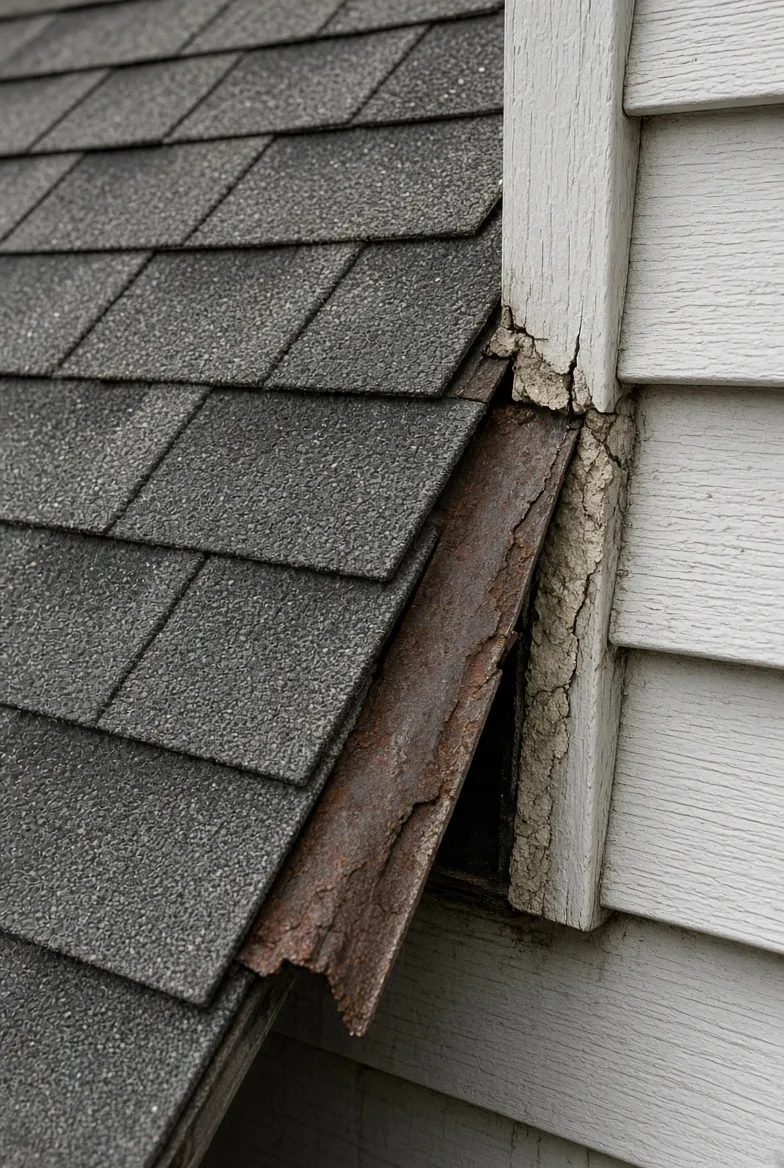
Exterior inspection. The roof area above that point is examined closely, including flashing at walls, chimneys and skylights, pipe boots, shingle condition, valleys and nail pops.
Controlled water testing. If the source still isn’t certain, a hose is run on small sections, starting at the lowest suspect area and moving up, while someone watches inside. When water appears, that section is the source. It’s slow, but definitive.
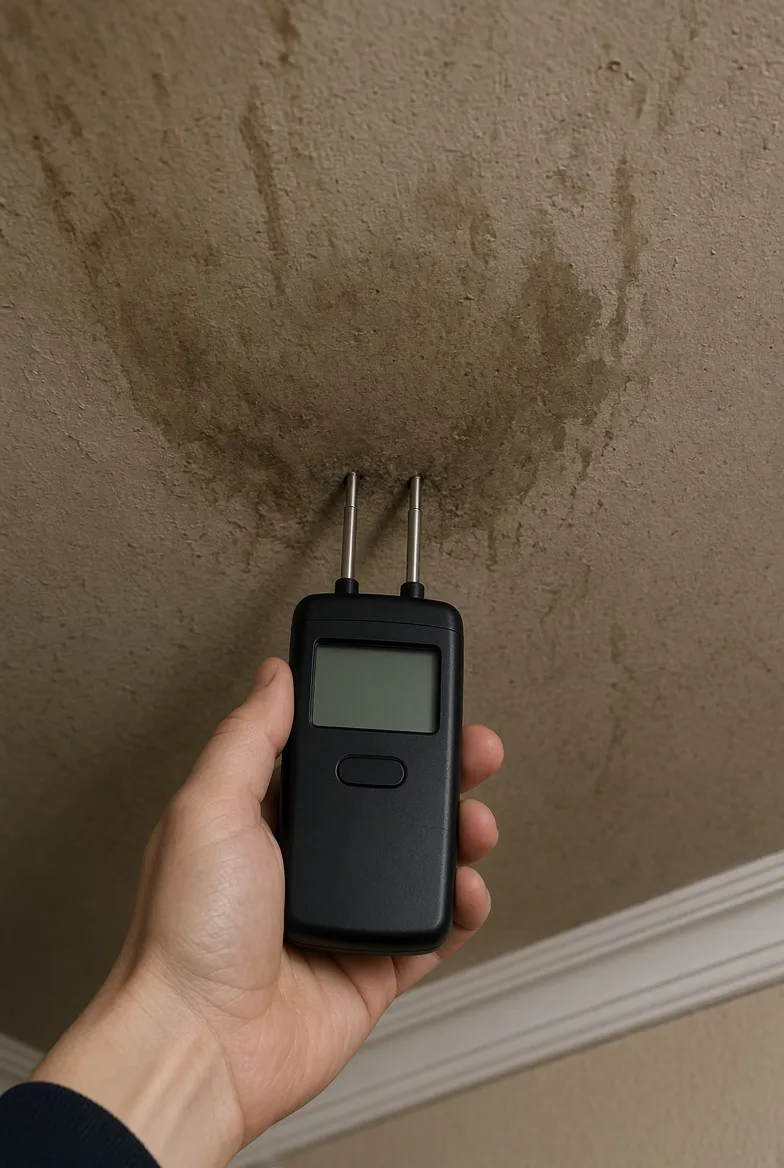
Moisture meters and thermal imaging. Meters measure moisture in decking and drywall. Thermal cameras, used in the right conditions, show wet insulation as temperature differences. These tools are especially useful on flat roofs, where water spreads under the membrane.
What are the warning signs that you need leak detection?
- A leak that has been patched once or more and came back.
- Stains that appear only during wind from one direction.
- Water showing up in different places in different storms.
- A stain far from any chimney, vent or skylight.
- Leaks that appear on dry days or only in cold weather.
- Peeling paint or damp drywall on an outside wall with no obvious cause.
- Multiple roof features (chimney, skylight, valley) near the wet spot.
- A musty attic smell without any visible drip.
What causes hard-to-find leaks?
Water travel is the biggest reason. Underlayment, roof decking and rafters channel water away from its entry point. Intermittent conditions come next: some openings only let water in when strong wind drives rain uphill, which happens with nor’easters and coastal storms around the Chesapeake. Multiple small failures close together can make one leak look like another.
Non-roof sources also cause confusion: condensation from bathroom fans or poor attic ventilation, plumbing leaks, window and siding leaks, and ice dams on cold winter days. Lastly, past patches that covered the symptom (caulk on the ceiling side, sealant smeared on shingles) hide the original problem.
What can you safely check yourself first?
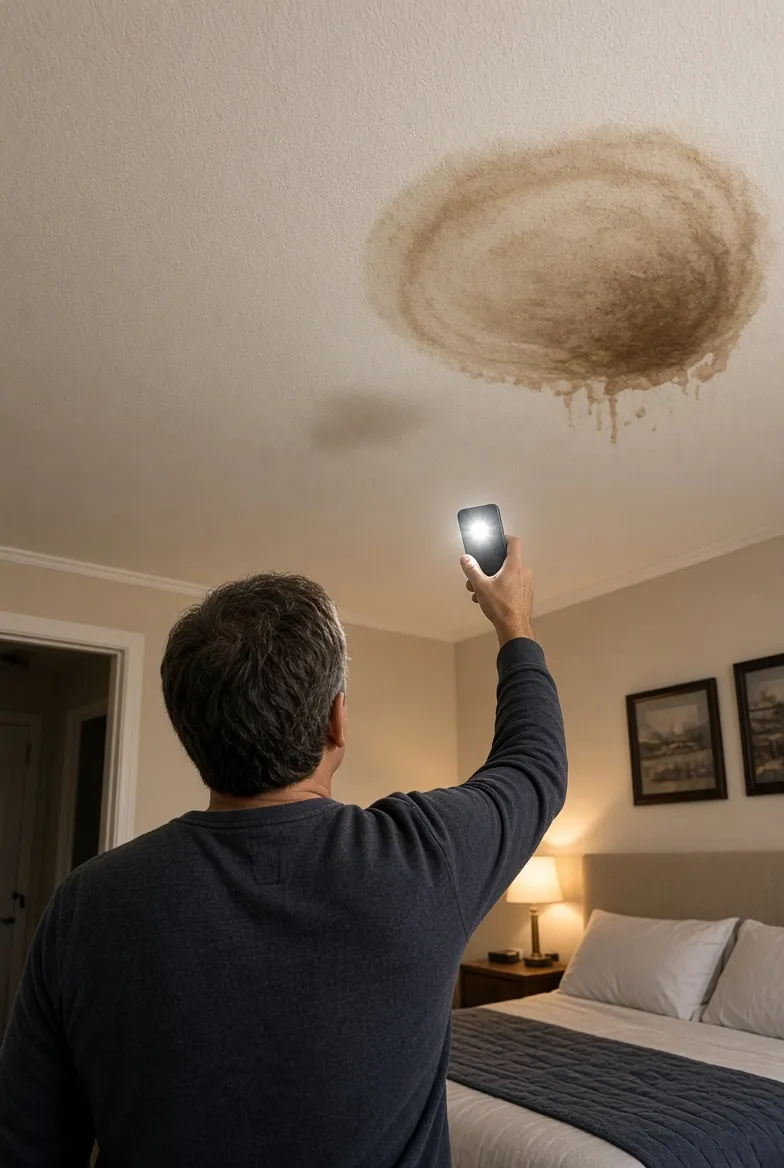
Keep a simple leak log: the date, the weather, the wind direction if you know it, and where the water appeared. Take photos of the stain with a ruler or coin for scale, so you can see if it grows.
In the attic on a dry day, look for old water trails on rafters and decking, and put tape at the highest stain you find. Check that bathroom fans vent outside and that insulation isn’t blocking the soffit vents.
What happens when the roofer visits?
- Interview and leak history. The roofer asks when and how the leak appears.
- Attic trace. The water path is followed uphill to the highest wet point.
- Roof inspection. Features above that point are examined in detail.
- Water test or meters if needed. Sections are tested one by one, or moisture is measured to map wet areas.
- Report and repair options. You get photos of the source and a clear repair plan, whether that’s chimney work, a vent boot or flashing.
What affects the cost of roof leak detection?
| Factor | Why it matters |
|---|---|
| Attic access | Tight or floored attics take longer to trace. |
| Need for water testing | Testing section by section takes time and two people. |
| Roof complexity | Multiple valleys, dormers and features mean more suspects. |
| Specialist tools | Thermal imaging or meters may be priced separately. |
| Repair on the same visit | Some providers combine detection and repair; others quote separately. |
How do you stop a leak from becoming a mystery next time?
The hardest leaks to trace are the ones with no history. A little record keeping turns the next leak, if there is one, into a quick visit.
Keep a roof file. Save the date and scope of every repair, photos of the work, the shingle brand and color if you know it, and the name of who did it. When a stain appears, the first question is always “what has been done up there before?”, and a roof file answers it in seconds.
Photograph your attic once while it’s dry. A few wide shots of the underside of the roof deck, chimney framing and vent pipes give you a baseline. New stains are then easy to spot and easy to show a roofer.
Check the attic after the first big storm of each season. A quick look with a flashlight after the first heavy autumn rain and the first big snow melt catches leaks while they’re still small and before insulation soaks up the evidence.
Fix ventilation and condensation issues. Many “mystery leaks” in winter are actually condensation from bathroom fans venting into the attic or from blocked soffit vents. Making sure fans exhaust outdoors and air can move through the attic removes a whole category of false alarms.
Avoid surface sealant patches. Smearing roof cement over a suspected spot hides the evidence a roofer needs to read. If you need a stop-gap, a tarp is better than goop.
Ask for photos of the source. After any repair, ask for a photo of the actual entry point and the fix. If the leak ever returns, you’ll know exactly what was done and where.
When is it an emergency?
Detection itself is rarely the emergency; the leak is. If water is actively pouring in, temporary protection comes first and detailed tracing can follow in dry weather.
If water is coming in now, start with emergency roof leak repair, then trace the source once things are dry.
Why is my roof leak so hard to find?
Water enters at one spot, then runs along the underlayment, rafters or a pipe before it drips onto the ceiling. The stain can be several feet from the opening. Wind-driven leaks that only happen in certain storms are harder still.
What is a roof water test?
A controlled test where one person runs a hose on a small section of roof while another watches from the attic. Starting low and moving uphill section by section, it shows exactly which area lets water through.
Do roofers use thermal cameras to find leaks?
Some do. Infrared cameras can show temperature differences caused by wet insulation or decking, which helps on flat roofs and large areas. Results depend on conditions, and they're usually combined with moisture meters and visual checks.
Can a leak come from something other than the roof?
Yes. Condensation, plumbing leaks, failed window seals, siding gaps and ice dams can all look like roof leaks. Good detection rules these out instead of assuming the roof.
How long does leak detection take?
A simple trace may take under an hour. Intermittent leaks that only appear in certain conditions can take longer and sometimes need a water test or a return visit after the next storm.
Is detection worth it if I already know roughly where the leak is?
If repeated patches have failed, yes. Patching the wrong spot is the main reason leaks come back. Knowing the exact source means the repair (often flashing) is done once.
Related repairs and areas

Water coming in?
Get roof leak detection help in Severna Park today
Call and describe what you're seeing. You'll be connected with a local roofing provider who can look at it.
(773) 302-2292